

The Cellist of Sarajevo
A brief overview of The Cellist of Sarajevo by Steven Galloway. The music, the context, and the things that really grabbed my heart and twisted it around. I couldn’t shake this book easily, so I thought I would share it with you just in case you’re in need of a compelling read that happens to include the power of music.
I recently read The Cellist of Sarajevo by Steven Galloway. It is a relatively short book set in the 1990s Siege of Sarajevo. The premise pivots on a cellist who plays the Adagio by Albinoni for 22 days in a row to honor the 22 people who died in a bombing while waiting for bread. The book follows 3 separate people through their life at that time, who do not directly interact with the cellist or each other, but who are deeply affected by what he does; a female sniper tasked with keeping him alive, a bread maker whose family has escaped the city, and a father who must travel through the city to get fresh water for his family.
From Goodreads:
This brilliant novel…tells the story of three people trying to survive in a city rife with the extreme fear of desperate times, and of the sorrowing cellist who plays undaunted in their midst.
One day a shell lands in a bread line and kills twenty-two people as the cellist watches from a window in his flat. He vows to sit in the hollow where the mortar fell and play Albinoni’s Adagio once a day for each of the twenty-two victims. The Adagio had been re-created from a fragment after the only extant score was firebombed in the Dresden Music Library, but the fact that it had been rebuilt by a different composer into something new and worthwhile gives the cellist hope.
Meanwhile, Kenan steels himself for his weekly walk through the dangerous streets to collect water for his family on the other side of town, and Dragan, a man Kenan doesn’t know, tries to make his way towards the source of the free meal he knows is waiting. Both men are almost paralyzed with fear, uncertain when the next shot will land on the bridges or streets they must cross, unwilling to talk to their old friends of what life was once like before divisions were unleashed on their city. Then there is “Arrow,” the pseudonymous name of a gifted female sniper, who is asked to protect the cellist from a hidden shooter who is out to kill him as he plays his memorial to the victims.
Perhaps because I was a child when the siege occurred, I was a little (read very) hazy on the details of this tragedy. While reading this book, I had to dig up some of the facts and history of what actually happened in order to make sense of such a travesty.
Owlcation did a pretty good job of summing up some of the facts:
Starting in 1992, the city of Sarajevo, capital of the Republic of Bosnia and Herzegovina, came under siege and was subjected to daily shelling and sniper attacks from Serbian forces in and around the city. The siege lasted from April 6, 1992 to February 29, 1996, the longest siege in modern history-- a year longer even than the Siege of Leningrad during World War Two.
When Yugoslavia's leader Marshal Tito died in 1980, the country's constituent ethnic and religious groups began vying for control. Some wanted independence; some wanted Yugoslavia to continue-- though under their control.
After the Republic of Bosnia and Herzegovina (hereafter referred to as “Bosnia”) declared its independence on March 3, 1992, Serbia, along with Bosnian Serbs and, initially, Croatia, prepared for war and sporadic fighting broke out in parts of Bosnia. As tensions mounted, 40,000 Bosnians, Serbs and Croats from all over Bosnia demonstrated for peace in Sarajevo on April 6, 1992, the same day that members of the European Union recognized Bosnia as an independent state. This show of ethnic unity angered Serb nationalists who fired into the crowd. This was considered the start of the Siege of Sarajevo.
Serbs and Bosnian Serbs held positions inside the city, including the airport, as well as in the surrounding hills. By May 2, the entire city was surrounded. They cut off supplies, including food and medicine, as well as water, electricity and heating fuel. Though equipped with superior weaponry and fully supplied, the Serbs were outnumbered by the city's defenders who were armed with anti-tank weapons and were able to stop the attacking armored columns. Faced with this standoff, the Serbs decided to lay waste to the city with their artillery and terrorize the population with sniper attacks.
Serbs and Bosnian Serbs held positions inside the city, including the airport, as well as in the surrounding hills. By May 2, the entire city was surrounded. They cut off supplies, including food and medicine, as well as water, electricity and heating fuel. Though equipped with superior weaponry and fully supplied, the Serbs were outnumbered by the city's defenders who were armed with anti-tank weapons and were able to stop the attacking armored columns. Faced with this standoff, the Serbs decided to lay waste to the city with their artillery and terrorize the population with sniper attacks.
This fictionalized telling of an actual occurrence painted a horrific scene. Kenan’s trek through the city to get water for his family is harrowing and the dreaming of simple luxuries that we take for granted, like shaving, consistent electricity, running water, being able to laugh carefree and spend time with friends carves such a bleak picture of the reality of the situation. I could not believe, reading this book and reading about the Siege, that this happened during my lifetime (and I’m not THAT old).
The Cellist of Sarajevo
While this is a work of fiction, the book is based on a real cellist, Vedran Smailović, of the Sarajevo Philharmonic Orchestra, who played outdoors in the ruins of the city and at funerals regardless of the constant threat of snipers and shellfire. I did not realize that composer David Wilde wrote a piece for solo cello called The Cellist of Sarajevo in his honor. Steven Galloway notes that Smailović managed to escape Sarajevo in 1993 and now resides in Northern Ireland.
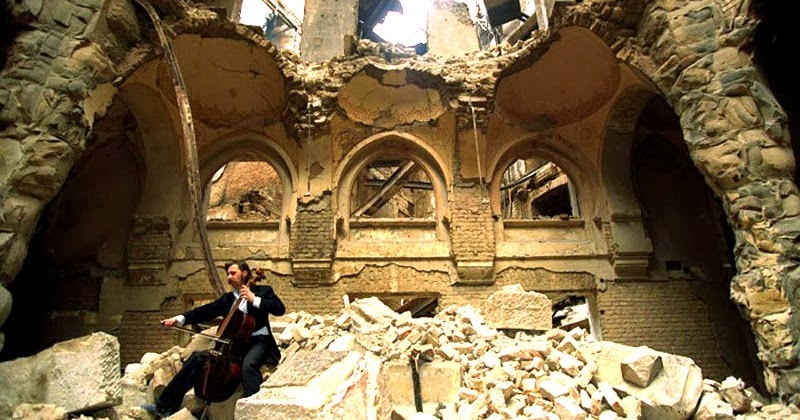
Albinoni’s Adagio in G
Here’s a brief what’s what from Wikipedia:
The Adagio in G minor for violin, strings, and organ continuo is a neo-Baroque composition popularly attributed to the 18th-century Venetian master Tomaso Albinoni, but actually composed by 20th-century musicologist and Albinoni biographer Remo Giazotto, purportedly based on the discovery of a manuscript fragment by Albinoni.
The composition is often referred to as "Albinoni's Adagio" or "Adagio in G minor by Albinoni, arranged by Giazotto." The ascription to Albinoni rests upon Giazotto's purported discovery of a manuscript fragment from a slow second movement of an otherwise unknown Albinoni trio sonata.
According to Giazotto, he obtained the document shortly after the end of World War II from the Saxon State Library in Dresden which had preserved most of its collection, though its buildings were destroyed in the bombing raids of February and March 1945 by the British and American Air Forces. Giazotto concluded that the manuscript fragment was a portion of a church sonata in G minor composed by Albinoni, possibly as part of his Op. 4 set, around 1708.
I lamely wasn’t sure if I knew this piece when I read the title, but when I looked it up it was one of those “oh duh of course I know this piece” moments. If you’re like me, and don’t recognize the title take a listen and I’m pretty confident you’ll recognize it.
Back to the Book
The cellist’s actions are questioned in the book, Arrow, is sent to protect him from assassination, the International media covers the performance, and Smailović is (still) seen as a global humanitarian hero. One of the characters in the book points out how the performance seems frivolous in the face of such danger and bleak conditions, until he witnesses his playing. Smailović plays at 4pm everyday for 22 days in a row and more and more people come to witness his memorial to the city.
I finished this book a few weeks ago and didn’t shed a tear, but it continues to weigh on me. I keep thinking about the living conditions of the residents of the city, losing loved ones and neighbors everyday, living in constant fear and the power of music to express something that is so hard to put into words. Something that captures the attention of the whole world, but touches deeply the people immediately surrounding the bombing and the city. How even the sniper sent to kill him (in the book) cannot help but put his gun down and listen to the performance. How Arrow considers it her most important mission yet, to keep the cellist alive.
I’m not one to wax lyrical about “the power of music” but truly there is something to it. Just like when Rostropovich played at the Berlin Wall, and now Yo Yo Ma is doing at the Mexico border, music does form a bridge that connects disparate parts. You don’t have to analyze the performance, the piece, the historical accuracy, or the acoustics, you just have to be present for the experience. Does it change anything quantifiable? Who knows. But is that really the point? Are you supposed to make a spreadsheet every time you hear something that moves you deeply? (god, I hope not).
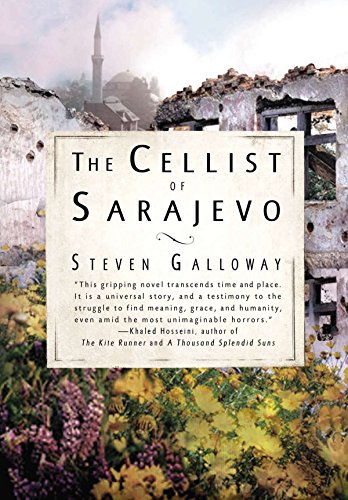
This review was written simply because I could not thinking about this book. Below are links to the sheet music and the book If you’re interested in obtaining a copy for yourself.
 look inside
|
Adagio in G Minor Composed by Tomaso Giovanni Albinoni (1671-1751). Edited by Werner Thomas-Mifune. Cello & Piano. Baroque. Instrumental solo book. With bowings and fingerings. 6 pages. Edition Kunzelmann #GM1670. Published by Edition Kunzelmann (PE.GM1670). |

My Timani Lesson
A quick recap of my introduction to Tina Nilssen and Timani. I am so excited about this work and have been thinking about it nonstop for the past month. Working with Tina was the highlight of the whole PAMA weekend. She has such amazing insight into the body of the musician. Enjoy!
This year I (finally) had the good fortune of attending the Performing Arts Medicine Association (PAMA) Symposium. When I discovered that it was going to be held at UCLA this year, I jumped at the chance to be there. I read and reread the schedule and topics presented and planned out my days. The symposium ran from Friday - Monday morning with a certificate course, “The Essentials of Performing Arts Health” scheduled for the Thursday before. I relied heavily on their journal, Medical Problems of Performing Artists(MPPA), for source material when I was researching my dissertation, “Using Iyengar Yoga to Enhance Violin Playing.” It is by far the most comprehensive source for articles about musicians health.
The Workshop
One of the Seminars was lead by Tina Margareta Nilssen, from Norway. Her workshop was titled “How Can We Help to Prevent Repetitive Strain Injury in Music Students While Simultaneously Enhancing Musical Expression,” and took place on Saturday afternoon. I was excited to attend her workshop because Tina and I had connected via social media, and it is not every day you meet someone also invested in Musicians Health and Wellness in person.
Her workshop politely blew my mind. While her workshop title is long and kind of ungainly, she emphasizes “Anatomical knowledge and physical implementation to create freedom and joy of playing.” Her workshop was upbeat and engaging. She has the type of presentation that is compelling and instantly makes you feel like you know her but also that you want to know more. I pretty much rushed the stage afterward to pepper her with more questions, and she (shockingly) asked if I would like to meet outside of the symposium to do more work (so I said yes, duh).
The Lesson
We met at Disney Hall for a private lesson and in true music student fashion (I got nervous beforehand). The first thing we did was discuss the ideal body of a musician (turns out it’s a chocolate-covered caramel – delicious) before I played for her, and she videotaped it. When I watched the footage, I thought my posture looked pretty good, but after 20-30 minutes or so of work together, I could see a subtle but dynamic difference in my playing. It was shocking.
We worked for approximately another hour, going over sitting posture and standing posture, and subtle cues to bring awareness back to areas of my body I was neglecting. After I played, we did not run scales and talk about technique or wrist placement, or anything most violin teachers narrow in on. Instead, we worked on how to breathe 3-dimensionally. We also talked about the appropriate musculature necessary for playing the violin, the function of specific muscles, and which muscles should be holding and supporting versus moving and applying pressure. I have news for you: much of violin pedagogy and what you are/have been taught by violin teachers with no anatomy knowledge or training can be damaging and does not provide optimal motion. This rocked my boat. For years during graduate school I had a teacher who was so “right” about alignment and somatic integration for violinists and being the good student that I was, I tried to do everything he asked by at least 110%. Come to find out that a teacher who is only partially informed and armed with an overabundance of confidence (and an exacting attitude) can do more harm than good. He celebrated my posture but chastised my performance nerves. I felt betrayed when I discussed this with Tina. For years, in an attempt to do what is correct, I was doing what is incorrect.
I always felt reasonably competent when it comes to filling my lungs, particularly in the front and sides. I have worked on this, for seemingly countless yoga hours. What I quickly realized is that I do not breathe into the back of my chest and ribcage. Also, I have always received praise for my great posture when I play. People point it out onstage, and I took pride in my stance, either seated or standing. But very subtly it is not so great. My chest and lower ribs jut forward, and my bottom pops out making it difficult to breathe into my back and also puts a strain on my Psoas muscle (which, incidentally, I learned quite a bit about at a different PAMA Symposium workshop). When I get nervous, which I was, it makes it even more difficult to breathe, make a good sound, and remain calm. It also exacerbates the nerves because again, as I discovered at the symposium, the Psoas muscle is intricately connected to the body’s fight or flight response. So everything I thought I was doing “right” was hindering my internal alignment and putting a considerable strain on my whole system making playing the violin, particularly when nervous even harder! This type of revelation makes me want to turn back the clock and redo all those silly auditions where I was so nervous and desperate to find control, without realizing I’m impeding my body’s natural wellbeing.

Alex Rosales Garcia working with Tina Nilssen on sitting posture at Disney Hall
I stayed after my lesson to observe her work with a bassoon player. Our instruments have different demands, but the improvement in sound with just a small amount of breath and posture work was so profound it was almost hilarious. To the untrained eye, it might appear that not much had changed, but internally, his body was supporting his breath and instrument more fully resulting in a tone that was large, round, and singing. It was beautiful and sounded so natural and free.
I would have stayed even longer to see another violinist have a lesson, but I had to run off to a gig. Tina graciously agreed to meet with us the next day and continue working together. It was fun, and the group setting (there were two of us plus Tina) had a relaxed workshop feel where we could freely ask questions as they arose and learned different applicable exercises or practices. She kept having to remind us that we were skipping around in her typical training but still, we could see and hear results. I was so excited to go home and practice because I LOVED my sound. My violin was singing, and I had a positive full-body experience while playing. How many of my colleagues can relate to that last statement? Sometimes I love to play but am sore afterward. Sometimes I play and feel great but am disconnected from the sound. These two days opened my eyes to the sensation of fully feeling the music pass through me and my instrument. It feels borderline profound, and I wish I could explain it better.

Tina is the first musician I have encountered that synthesizes information in a way that is practical, attainable, easy to understand and apply, and musically focused. I have tried Alexander technique, some body mapping, yoga, etc. but this is the first time I have experienced the results so immediately and thoroughly in a manner that focuses on optimal musical expression by the performer.
I signed up for the Timani community after our work together so I could learn more and keep improving. The last thing I want to do is mismanage my body in the practice room, or even worse – pass on incorrect information to my students. As I internalize some of these points, I want to incorporate them into my own teaching and pass them on to my students. You can check out more about Tina click here and Timani here, and you can sign up for the community (the first month is free and packed full of useful information) here.

My Favorite Summer Tradition
Going to the Hollywood bowl is one of my absolute favorite things to do on a summer night in Los Angeles. What about you?
***Are you interested in free tickets to the Bowl this summer? Follow me on Instagram @activeviolinist for opportunities to win tickets to upcoming performances like Yuja Wang next week!***
Now that I've lived in Los Angeles for a year, I feel sure that going to the Hollywood Bowl is my favorite summer tradition.
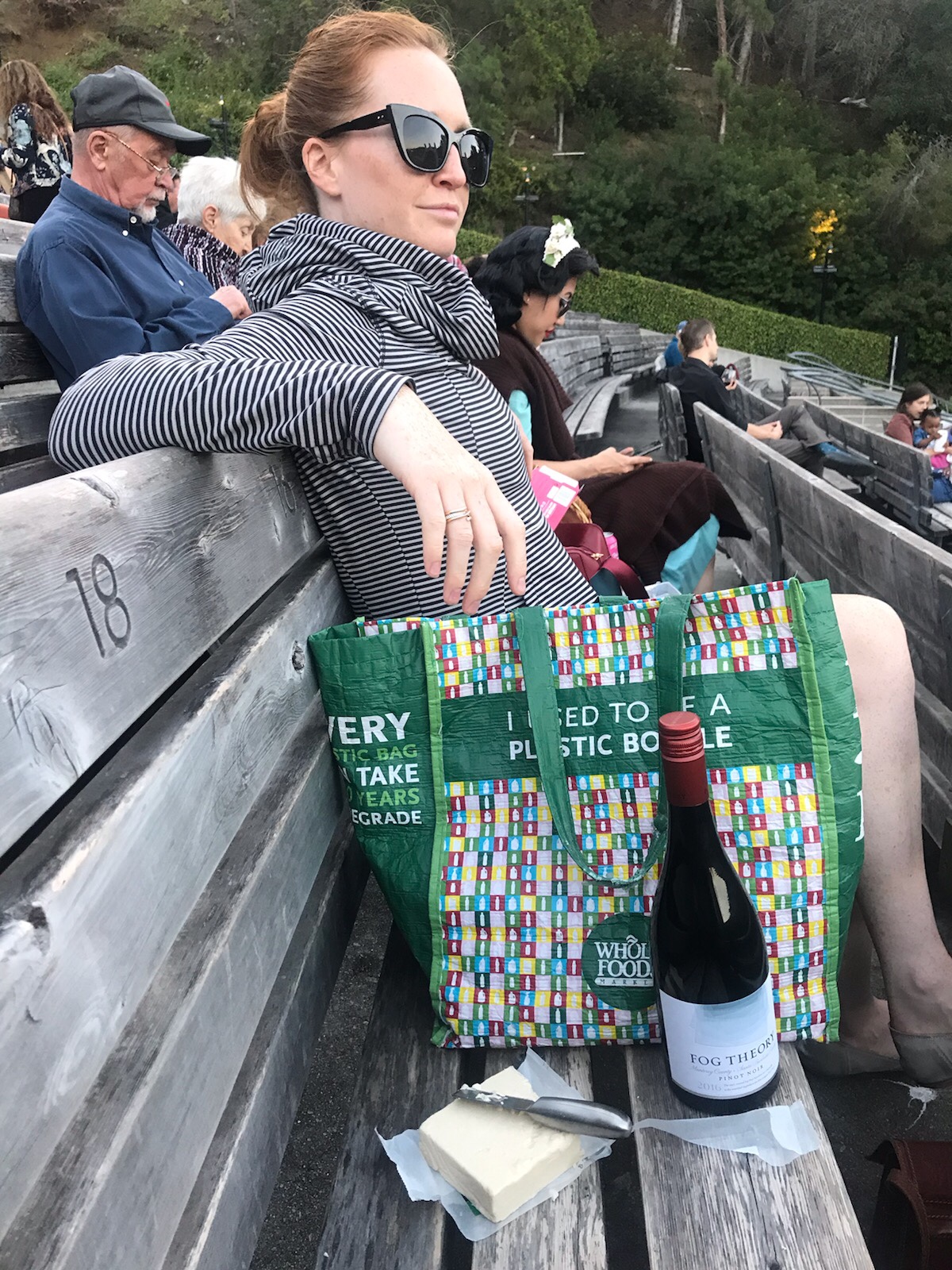
Jeff and I went twice last year, and in the past two weeks, I've gone three times. I love it! So far, I stick to the LA Phil concerts and have yet to see one of the pop performances, but the Bowl is easily one of my favorite places in LA. Jeff and I pack a picnic, and a bottle of wine or a few beers and typically sit in the cheap seats at the back. I don't go there for the acoustics, or the incredible sightlines –– but I adore the ambiance. Feeling the cool summer breeze, being in a relaxed environment, enjoying some snacks and beverages, and hanging out with friends, takes some of the snobbery out of orchestra attendance. Musical connoisseurs sit next to people who came for a chance to be outside, season ticket holders are side-by-side with first-time orchestra concert-goers, and people who want to socialize share a row with those who wish to enjoy an evening of beautiful music. And I bet that everyone is having a fantastic time. If I could go every week, I probably would.
Last week, Jeff and I packed a bottle of wine, some cheese and crackers, and a blanket and headed to the Bowl to watch the Carnival of the Animals by Saint Saëns, and Symphonie Fantastique by Berlioz. Typically, I might skip this concert, but the ladies of Sounding Point gave me tickets, and I have never seen Carnival live (plus I will take any excuse to get to the Bowl), so off we went. The show featured the Labèque Sisters on piano and the actor Sean Hayes as narrator. Hayes made his entry in a cage, and I chuckled throughout his performance, PARTICULARLY when he sat down at one of the pianos and performed part of a movement. It was hilarious. He played up the flamboyance and stage antics of a concert pianist and then "critiqued" one of the sisters while out of breath, sweating, and dramatically recovering from his performance. It was excellent.
Then, on the following Thursday, I was invited to the Falla and Flamenco performance featuring Siudy Flamenco Dance Theater performing El Amor Brujo – or Spell-bound Love. I was entranced, spellbound, and mesmerized by the music, singer, and especially the dancers. If I wasn't a fan before, I certainly am now! I could not get over the choreography, costumes, and footwork. I love how rhythmic flamenco is; how sometimes the feet are moving incredibly fast while the rest of the body is very fluid or even still, and how it fits with and enhances the sound of the orchestra. I don't know anything about flamenco, but I know that I want to see and hear more. This was one of the best "classical" concerts I have seen in a while. I've never felt more inspired to jump to my feet and scream encore at the end of a show. Before this concert, I was unfamiliar with this piece, as it is not performed very often, to my knowledge. The synopsis (thank you Wikipedia) is:
El Amor Brujo is the story of an Andalusian gypsy woman called Candela. Although her affection is for a man named Carmelo, as a girl, she was promised to be married to another man (then a boy). After many years Candela's husband has died (at the hands of the husband of a woman named Lucia), but he continues to haunt his wife.
The entire village knows about the haunting, but still brands Candela as crazy because she dances every night with her husband's ghost. Candela, now a widow, is free to establish a relationship with Carmelo but continues to be haunted by her husband's ghost.
After a conversation with other women of the village, Candela finally comes to realize that her husband was unfaithful to her, despite all her efforts to make their marriage work; her husband's lover is revealed to have been Lucia.
Candela and Carmelo get advice that a ritual dance is necessary to cast the ghost off, but it does not work. The ghost is still obsessed with Candela's soul.
Candela manages to trick Lucía to come that night, with the excuse of hooking her up with Carmelo. As she turns up, the nightly ritual of Candela's dance with her husband's ghost begins, but at the last moment Candela moves away from her husband and Lucía is taken away by her now dead lover.
Dawn breaks, Candela and Carmelo are now truly free to enjoy their love.
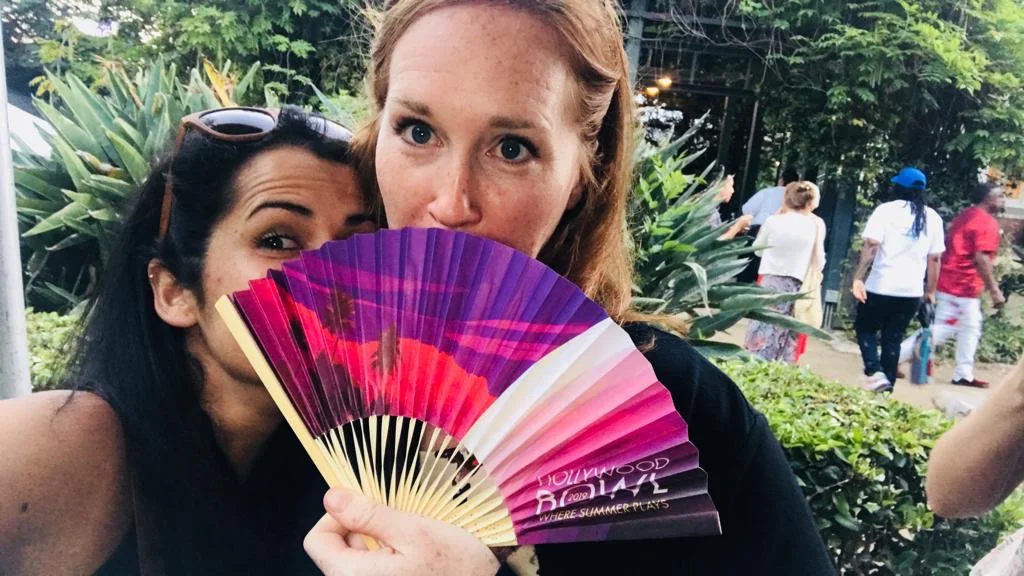
Before the concert, we attended a special picnic catered by the James Beard Award-winning chefs Suzanne Goin and Caroline Styne (of celebrated local restaurants Lucques, a.o.c., Tavern, and The Larder). The food was incredible. The octopus tacos still haunt my dreams, and I think about the Tuna every day. I have yet to visit these restaurants, but the flavor compels me.
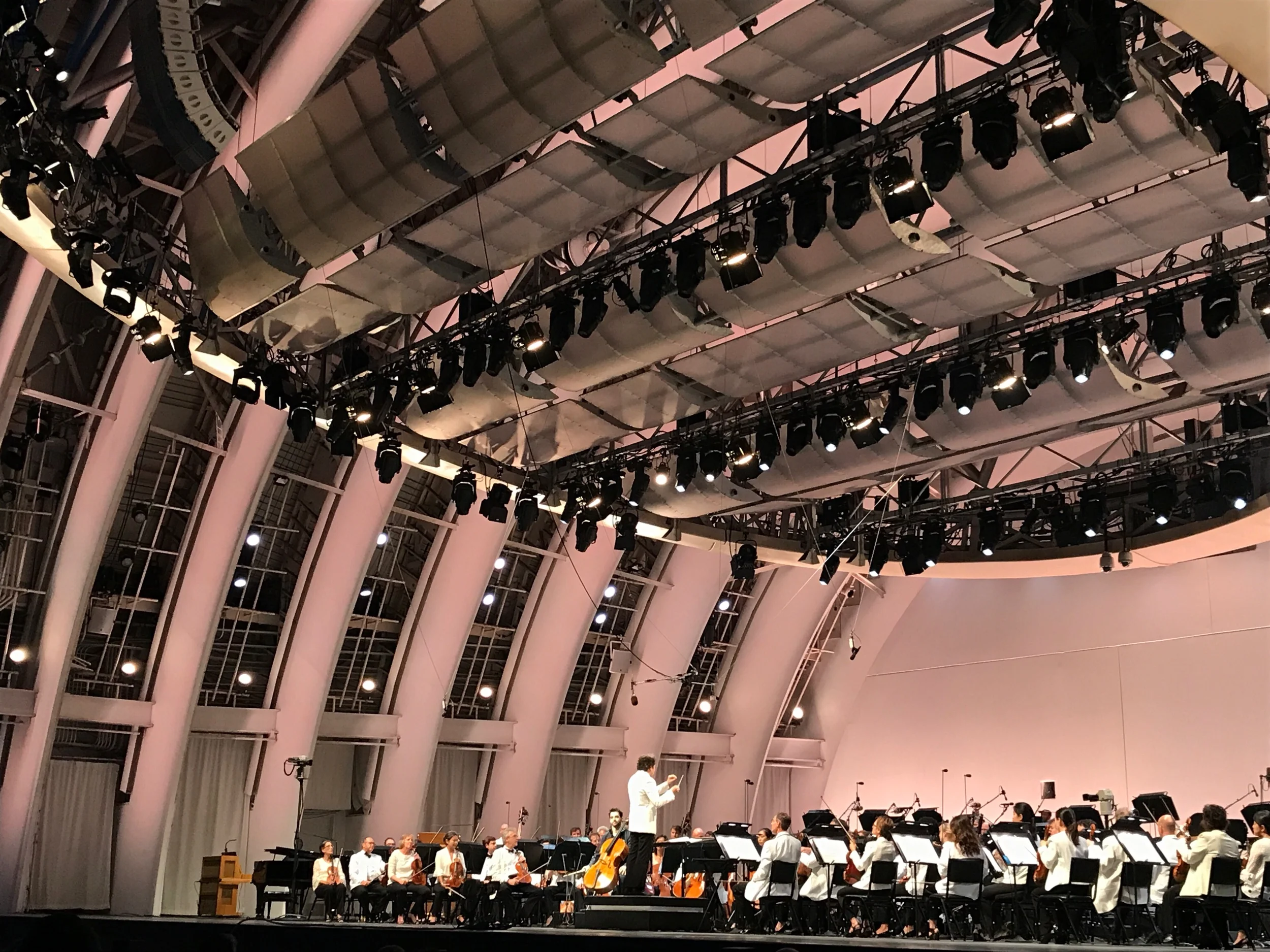
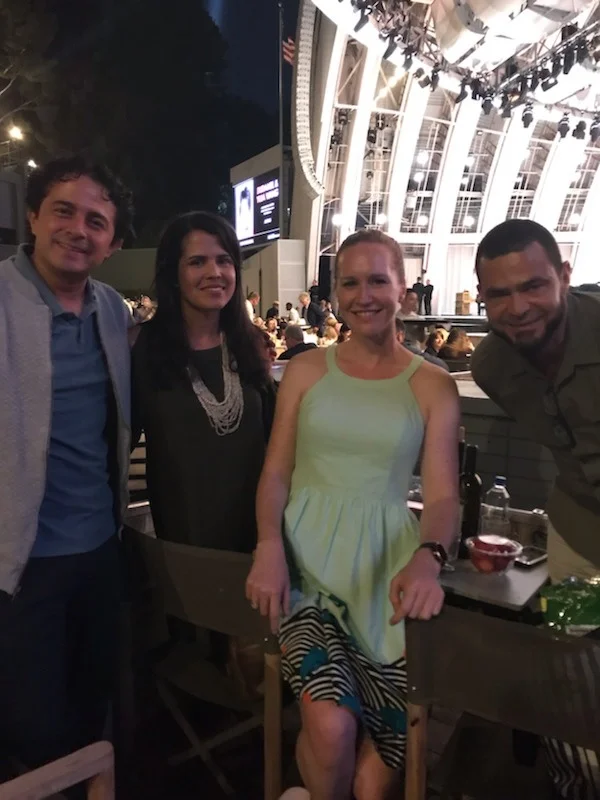
This week, unexpectedly, Maestro Juan Felipe of YOLA invited me and Caroline to join him in box seats to see the Dvorák Cello Concerto and Prokofiev's Romeo and Juliet featuring Gustavo Dudamel, cellist Pablo Ferrández, and Benjamin Millepied's choreography. I was so excited to sit close enough to see the soloist interact with Dudamel. I loved how the choreography took over the entire Bowl with fight scenes in the aisles, balcony scenes in the "lobby" areas, and party scenes in backstage storage rooms. Millepied was the cameraman (which I did not realize until later), and he made the camera work feel like part of the choreography. You watch the screens and feel intimately engaged in the drama that is taking place all around you, then turn your head and watch the action happen right beside you, then two minutes later, and it is back on the stage. While the focus was not on the orchestra, they played exquisitely – I could hear every not of those ferocious violin passages. In the words of Mark Swed from the LA Times, "This should be the future of virtual reality — not those silly headsets, pixilated video, cheapo headphones, and compressed audio." It was such a treat.
Are you interested in free tickets to the Bowl this summer? Follow me on Instagram @activeviolinist for opportunities to win tickets to upcoming performances like Yuja Wang next week!