
Finlandia - A Song of Peace
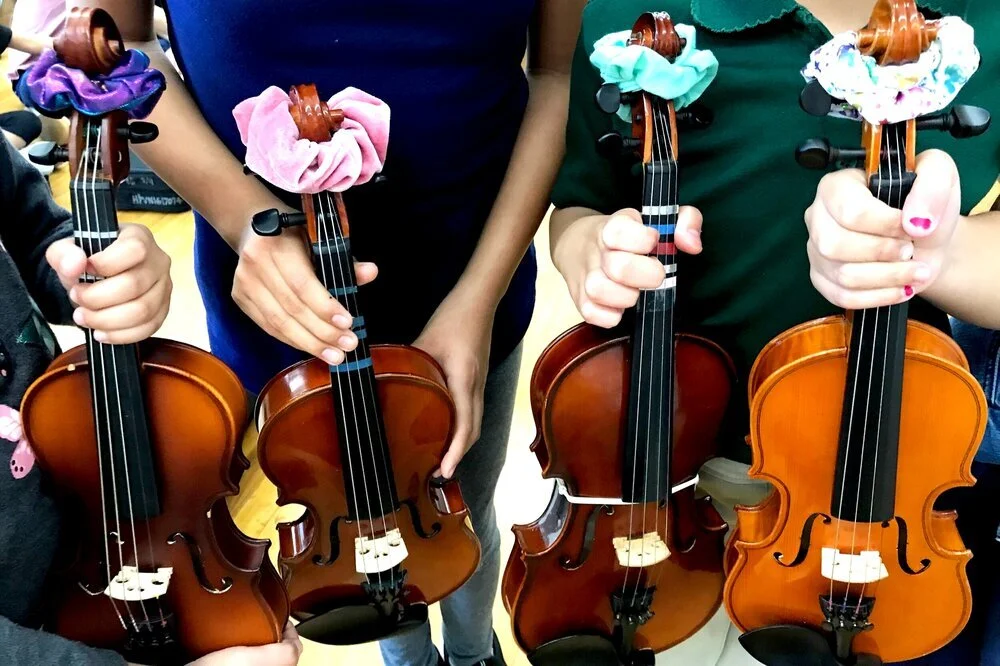
I wrote this blog post while thinking about my beginning orchestra students at Longfellow Elementary. It started as me arranging their orchestra music for 4 violins and then, true to form, I couldn’t help digging around and learning a little more and then writing even more about the piece. Hope you enjoy Finlandia in several different arrangements...including mine AND the Indigo Girls.

In the Fall of 2019, which feels like decades ago, I selected the Finlandia Theme for the Beginning Orchestra at Longfellow Elementary School in Pasadena, where I am a Music Director for the Harmony Project. I have fond memories of playing Finlandia in my youth orchestra days, summer festivals, and professional ensembles, so I was excited to find a simple arrangement of the theme that my group could play.
For those of you who have experience training young, beginning musicians in an orchestra setting, you might be familiar with the trials and tribulations of the rehearsal process. Things were slow going as we crafted our version for the December Concert. Still, the students shined in the performance, and during the early spring semester, regularly asked to play Finlandia. Several said it was their favorite piece. I just had to chuckle at this because the learning process did not kindle nearly this much passion for the composition. However, after they mastered it, they couldn’t stop playing it.
When Coronavirus hit, and all educational endeavors moved online – including music education – I felt so removed from many of my students. I started arranging their orchestra pieces for 4 part violins to share videos and music with them and keep their motivation high. When our online Spring Recital rolled around, I was touched to hear several students play Finlandia as their solo selection. It was so moving and a good reminder that as teachers we often plant seeds that germinate, grow, and blossom beautifully and sometimes unexpectedly…and sometimes those blooms take a little longer than expected.
In the same way that I highlighted the Theme from Jupiter when my students worked on it this Spring, I thought I would take this opportunity to dive into Finlandia and tell you a little more about it. No, I did not sing this song in school. No, I was not reprimanded for goofing off in assembly. I will admit that while I knew it was fiercely patriotic, I was naive to the fact that it was written as a response to czarist Russia in a celebration of the Finnish free press. I’m glad I learned something in this endeavor as well.
The History:
Sibelius wrote Finlandia for the Finnish Press Pension Celebration of 1899, a thinly veiled rally in support of freedom of the Finnish press, then primarily controlled by czarist Russia. Sibelius's contribution to the three-day pageant was a set of nationalistic musical tableaux. He later recycled several of these pieces into the suite, Historic Scenes No. 1, but the grand finale, originally called "Finland Awakens," became what is now known as Finlandia. The title “Finland Awakens” attracted negative attention from the czarist régime, so the piece was initially known as Impromptu. The Helsinki Philharmonic gave its first performances as Finlandia at the Paris World Exhibition of 1900.
I love that opening - don’t you? Those chords make the hair on the back of my neck stand up.
In program notes for the LA Phil, Susan Key writes,
“Like all successful symphonic poems, Finlandia’s extra-musical meaning generates the music's formal shape. The composer described this meaning in stirring words: "We fought 600 years for our freedom, and I am part of the generation which achieved it. Freedom! My Finlandia is the story of this fight. It is the song of our battle, our hymn of victory.” His genius is that this story functions simultaneously on both exterior and interior levels – capturing just that intersection where patriotism feeds personal identity and vice versa.”
What an interesting sentiment. Are there parallels in today’s world? Based on how many times this tune has been re-imagined in different contexts and with different lyrics, her words certainly strike a chord.
The Hymn
Sibelius later reworked the Finlandia Hymn into a stand-alone piece. This hymn, with words written in 1941 by Veikko Antero Koskenniemi, is one of Finland's most important national songs. Today, during performances of the full-length Finlandia, a choir sometimes sings the Finnish lyrics with the hymn section.
Finnish lyrics:
Oi Suomi, katso, sinun päiväs koittaa,
yön uhka karkoitettu on jo pois,
ja aamun kiuru kirkkaudessa soittaa,
kuin itse taivahan kansi sois.
Yön vallat aamun valkeus jo voittaa,
sun päiväs koittaa oi synnyinmaa.
Oi nouse, Suomi, nosta korkealle
pääs seppelöimä suurten muistojen,
oi nouse, Suomi, näytit maailmalle
sa että karkoitit orjuuden
ja ettet taipunut sa sorron alle
on aamus alkanut synnyinmaa.
English translation:
Oh Finland, behold, thy daylight is dawning,
the threat of night has now been driven away.
The skylark sings across the light of morning,
like the firmament itself was chiming,
and now the day the powers of night is scorning:
thy daylight dawns, oh fatherland!
Oh Finland arise, and raise towards the highest
thy head now crowned with mighty memories.
Oh Finland arise, for to the world thou criest
that thou hast thrown off thy slavery,
beneath oppression's yoke thou never liest.
Thy morning's come, motherland!
It is also sung as a Christian hymn (Be Still My Soul, Hail, Festal Day, A Song of Peace, and in Italian evangelical churches: Veglia al Mattino). In Wales, Lewis Valentine uses the tune for the patriotic hymn Gweddi Dros Gymru (A Prayer for Wales).
This is My Song / A Song of Peace
One of the more famous renditions of this hymn is "This is My Song," also known as "A Song of Peace," with lyrics written in 1934 by Lloyd Stone. It often appears in hymnals with substituted and additional verses by Georgia Harkness (1891–1974). It is sometimes called "A Song of Peace," taken from the second line of the song.
Lloyd Stone (1912 – 1993) was born in California and attended the University of Southern California as a music major, with the intent of becoming a teacher. Instead, he joined a circus bound for Hawaii and remained there for the rest of his life, writing poems and songs. "A Song of Peace" is his best-known work. He wrote Stanzas 1 and 2 when he was only 22 years old.
Georgia Elma Harkness (1891- 1974) was a Methodist theologian with a passion for poetry and the arts. Born in Harkness, New York, Georgia was a graduate of Cornell and also studied at Yale and Harvard. A trailblazer for generations of women to follow, Georgia was the first female theologist to teach in a seminary. She wrote nearly forty books in the course of her career.
Lyrics:
This is my song, O God of all the nations,
a song of peace for lands afar and mine;
this is my home, the country where my heart is;
here are my hopes, my dreams, my holy shrine:
but other hearts in other lands are beating
with hopes and dreams as true and high as mine.
My country’s skies are bluer than the ocean,
and sunlight beams on cloverleaf and pine;
but other lands have sunlight too, and clover,
and skies are everywhere as blue as mine:
O hear my song, thou God of all the nations,
a song of peace for their land and for mine.
May truth and freedom come to every nation;
may peace abound where strife has raged so long;
that each may seek to love and build together,
a world united, righting every wrong;
a world united in its love for freedom,
proclaiming peace together in one song.*
*Third stanza by Georgia Harkness.
This version was recorded and performed by many artists, including (my favorites) The Indigo Girls.
Finlandia in Pop Culture
References to Finlandia can also be found in pop culture although admittedly, I had never heard of or seen most of these (no offense to The Walking Dead or the Die Hard Series.):
Finnish film director Renny Harlin featured Finlandia prominently in the film score for his 1990 film Die Hard 2: Die Harder.
Finlandia is used in Finders Keepers, Lovers Weepers! by Russ Meyer.
Finnish symphonic power metal band Nightwish has used Finlandia as an intro to their live concerts, such as shows that are a part of their Imaginaerum World Tour.
Before joining Nightwish, Troy Donockley had already played a version of Finlandia as a guest musician for Mostly Autumn. It also appears on his album The Unseen Stream.
Joan Baez featured the Finlandia Hymn on her 2005 live album Bowery Songs. Baez's live performance also appeared on the album Mitä Vapaus, a compilation of protest songs by various artists, released by Amnesty.
On 8 December 2015, Sibelius' 150th birthday, Sibelius Academy of the University of the Arts Helsinki, gathered over 1000 people on the Senate Square to sing Finlandia.
The Walking Dead features Finlandia in episode 5 of season 7 as Sasha and Maggie awaken at Hilltop in the night to a recording of Finlandia blasting from a parked car and zombies coming in.
Sources:
https://www.britannica.com/topic/Finlandia
https://www.laphil.com/musicdb/pieces/354/finlandia
https://en.wikipedia.org/wiki/Finlandia
https://en.wikipedia.org/wiki/Finlandia_hymn
https://en.wikipedia.org/wiki/This_is_my_song_(1934_song
http://yourdailypoem.com/listpoem.jsp?poem_id=497
The Menuhin Tour of San Francisco Part 2
The second installment of my Menuhin treasure hunt around CA (the world?). This is his family home beginning in 1923. Beautiful!
This is the second installment of my Yehudi Menuhin housing obsession. If you want to visit the first, click here.

1043 Steiner Street. The home of Yehudi Menuhin beginning in 1923.
Jeff and I drove to Northern California for Thanksgiving this year (which was amazing in case anyone is wondering - I am now obsessed and can’t wait to return) and picked up my gal pal Kat on our way to Sonoma County where we rented a cabin in the woods for a few days. We stopped briefly in San Francisco but stayed just long enough for me to go on an Active Violinist field trip to hunt down yet another home where Yehudi Menuhin resided.

Fortunately, Kat lives blocks away from Menuhin’s early family home (both of them) so it was easy to stop by and snap some photos and made a good excuse to stretch our legs after a few hours in the car.
Menuhin and his family moved from 732 Hayes Street to 1043 Steiner Street at some point in 1923 (according to Humphrey Burton, most likely in the autumn). These residences are walking distance from each other and very close to Alamo Square and the Painted Ladies so I can only imagine what they might cost to purchase or rent these days.
Burton writes;
“By [1923] Yehudi’s potential as a performer would have been sufficiently evident for them to buy a residence appropriate for their future needs. The handsome two-storey wooden house, 1043 Steiner Street, still stands on one of San Francisco’s attractive hillsides. It boasted a double living room, normally divided by sliding doors into dining and living rooms but capable when opened up of seating sixty guests an an informal concert - an astonishingly grandiose concept for a young couple of limited means with three very small children. But the Menuhins loved entertaining…and they needed somewhere for young Yehudi to play for their friends.
There was a small room off the kitchen where the boy did his daily practice. Marutha did not oversee his work so much as overhear it while she prepared the meals. At the back there was a yard with some trees and a swing. They built a deck on which they erected a large tent and there the entire family slept, in divided sections, apparently all the year round, because the ingenious Moshe let out the upstairs bedrooms to lodgers…In the basement Moshe created a large garage where he rented parking spaces to pay off the $5000 mortgage on the new house at $50 per month.” (24-25). [1]

We pulled into San Francisco in mid-afternoon of the Wednesday before Thanksgiving. It was beautifully sunny, and still a little damp from the rain the previous evening but the light was so special and the temperature was perfect. We strolled through the park to take a look at the house on Steiner Street. It is well maintained but missing any commemorative plaque for the violinist - which, again, feels quasi scandalous. Who will remember the greatness that passed through those doors if the city does not commemorate it appropriately? Jeff and Kat encouraged me to knock on the door and ask for an informal tour but I felt too shy so we tried to go next door to Chateau Tivoli, a bed and breakfast to see if the staff could give us a clue about the current residents. Interestingly enough, from 1898-1917 the bed and breakfast was the private residence of Mrs. Ernestine Kreling, owner of the famous Tivoli Opera House, the first place where opera was sung on the West Coast. In the early part of the 20th century, the neighborhood was largely Jewish, and after 1917 was sold to the Emanu-El Sisterhood as a home for single girls, and subsequently housed many and various Jewish organizations. [2] The things you learn when you start digging!
Stay tuned for the next installment of Menuhin trivia. I’m not sure what it will be, but it will arrive soon.

Sources:
[1] Humphrey Burton, Yehudi Menuhin, A Life. Northeastern University Press: Boston, 2000.
[2] https://www.chateautivoli.com
My Favorite Summer Tradition
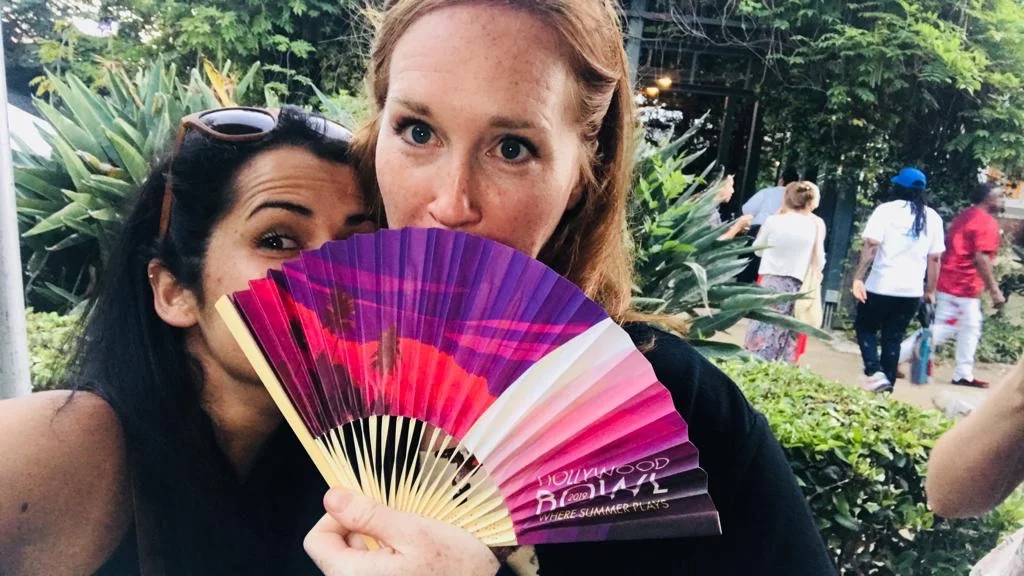
Going to the Hollywood bowl is one of my absolute favorite things to do on a summer night in Los Angeles. What about you?
***Are you interested in free tickets to the Bowl this summer? Follow me on Instagram @activeviolinist for opportunities to win tickets to upcoming performances like Yuja Wang next week!***
Now that I've lived in Los Angeles for a year, I feel sure that going to the Hollywood Bowl is my favorite summer tradition.
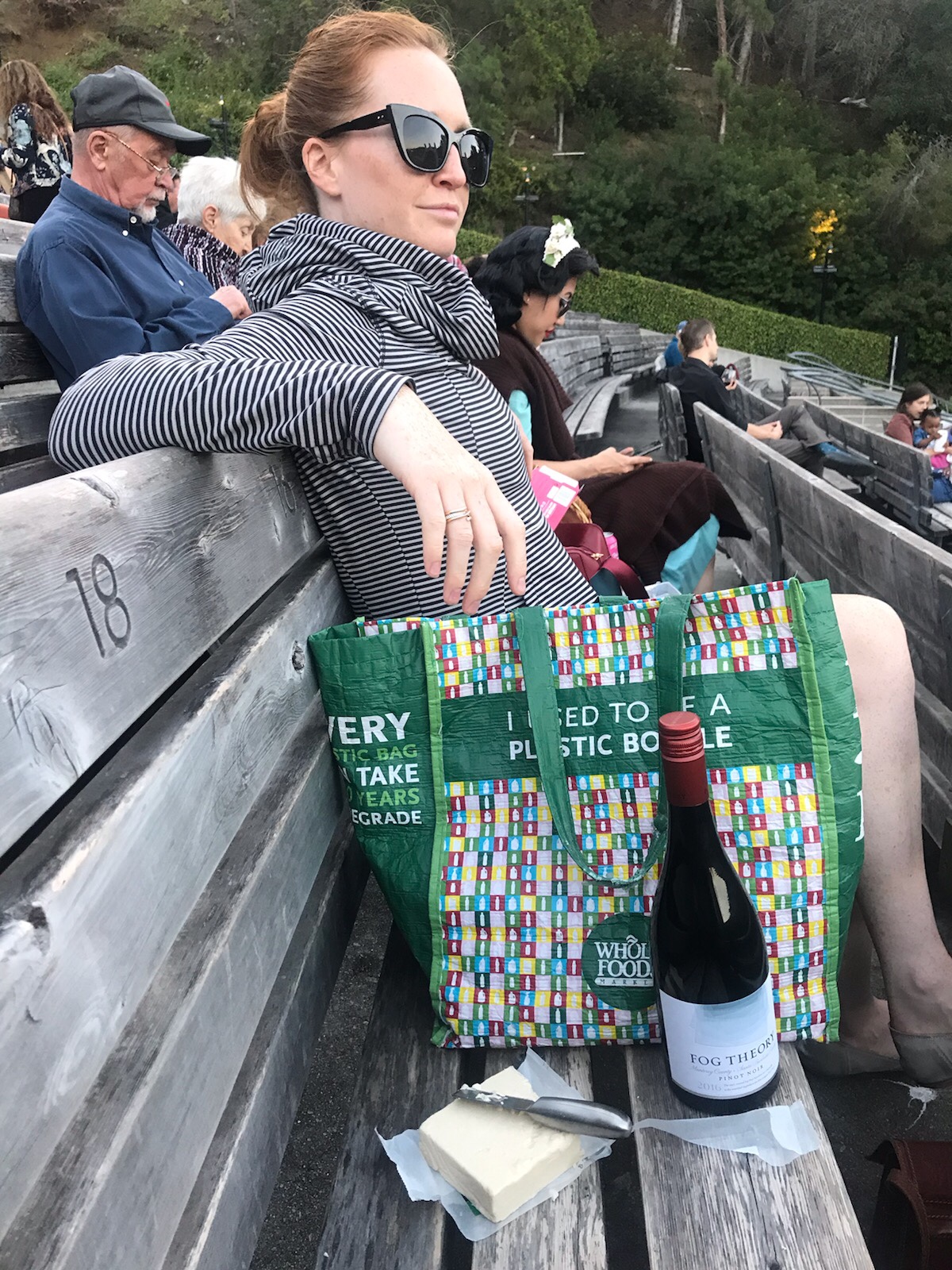
Jeff and I went twice last year, and in the past two weeks, I've gone three times. I love it! So far, I stick to the LA Phil concerts and have yet to see one of the pop performances, but the Bowl is easily one of my favorite places in LA. Jeff and I pack a picnic, and a bottle of wine or a few beers and typically sit in the cheap seats at the back. I don't go there for the acoustics, or the incredible sightlines –– but I adore the ambiance. Feeling the cool summer breeze, being in a relaxed environment, enjoying some snacks and beverages, and hanging out with friends, takes some of the snobbery out of orchestra attendance. Musical connoisseurs sit next to people who came for a chance to be outside, season ticket holders are side-by-side with first-time orchestra concert-goers, and people who want to socialize share a row with those who wish to enjoy an evening of beautiful music. And I bet that everyone is having a fantastic time. If I could go every week, I probably would.
Last week, Jeff and I packed a bottle of wine, some cheese and crackers, and a blanket and headed to the Bowl to watch the Carnival of the Animals by Saint Saëns, and Symphonie Fantastique by Berlioz. Typically, I might skip this concert, but the ladies of Sounding Point gave me tickets, and I have never seen Carnival live (plus I will take any excuse to get to the Bowl), so off we went. The show featured the Labèque Sisters on piano and the actor Sean Hayes as narrator. Hayes made his entry in a cage, and I chuckled throughout his performance, PARTICULARLY when he sat down at one of the pianos and performed part of a movement. It was hilarious. He played up the flamboyance and stage antics of a concert pianist and then "critiqued" one of the sisters while out of breath, sweating, and dramatically recovering from his performance. It was excellent.
Then, on the following Thursday, I was invited to the Falla and Flamenco performance featuring Siudy Flamenco Dance Theater performing El Amor Brujo – or Spell-bound Love. I was entranced, spellbound, and mesmerized by the music, singer, and especially the dancers. If I wasn't a fan before, I certainly am now! I could not get over the choreography, costumes, and footwork. I love how rhythmic flamenco is; how sometimes the feet are moving incredibly fast while the rest of the body is very fluid or even still, and how it fits with and enhances the sound of the orchestra. I don't know anything about flamenco, but I know that I want to see and hear more. This was one of the best "classical" concerts I have seen in a while. I've never felt more inspired to jump to my feet and scream encore at the end of a show. Before this concert, I was unfamiliar with this piece, as it is not performed very often, to my knowledge. The synopsis (thank you Wikipedia) is:
El Amor Brujo is the story of an Andalusian gypsy woman called Candela. Although her affection is for a man named Carmelo, as a girl, she was promised to be married to another man (then a boy). After many years Candela's husband has died (at the hands of the husband of a woman named Lucia), but he continues to haunt his wife.
The entire village knows about the haunting, but still brands Candela as crazy because she dances every night with her husband's ghost. Candela, now a widow, is free to establish a relationship with Carmelo but continues to be haunted by her husband's ghost.
After a conversation with other women of the village, Candela finally comes to realize that her husband was unfaithful to her, despite all her efforts to make their marriage work; her husband's lover is revealed to have been Lucia.
Candela and Carmelo get advice that a ritual dance is necessary to cast the ghost off, but it does not work. The ghost is still obsessed with Candela's soul.
Candela manages to trick Lucía to come that night, with the excuse of hooking her up with Carmelo. As she turns up, the nightly ritual of Candela's dance with her husband's ghost begins, but at the last moment Candela moves away from her husband and Lucía is taken away by her now dead lover.
Dawn breaks, Candela and Carmelo are now truly free to enjoy their love.
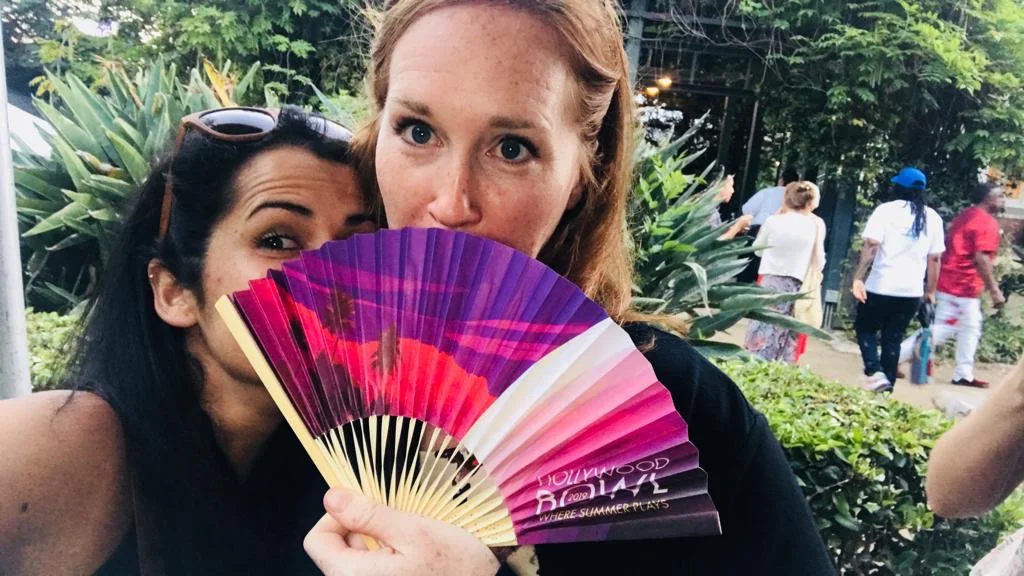
Before the concert, we attended a special picnic catered by the James Beard Award-winning chefs Suzanne Goin and Caroline Styne (of celebrated local restaurants Lucques, a.o.c., Tavern, and The Larder). The food was incredible. The octopus tacos still haunt my dreams, and I think about the Tuna every day. I have yet to visit these restaurants, but the flavor compels me.
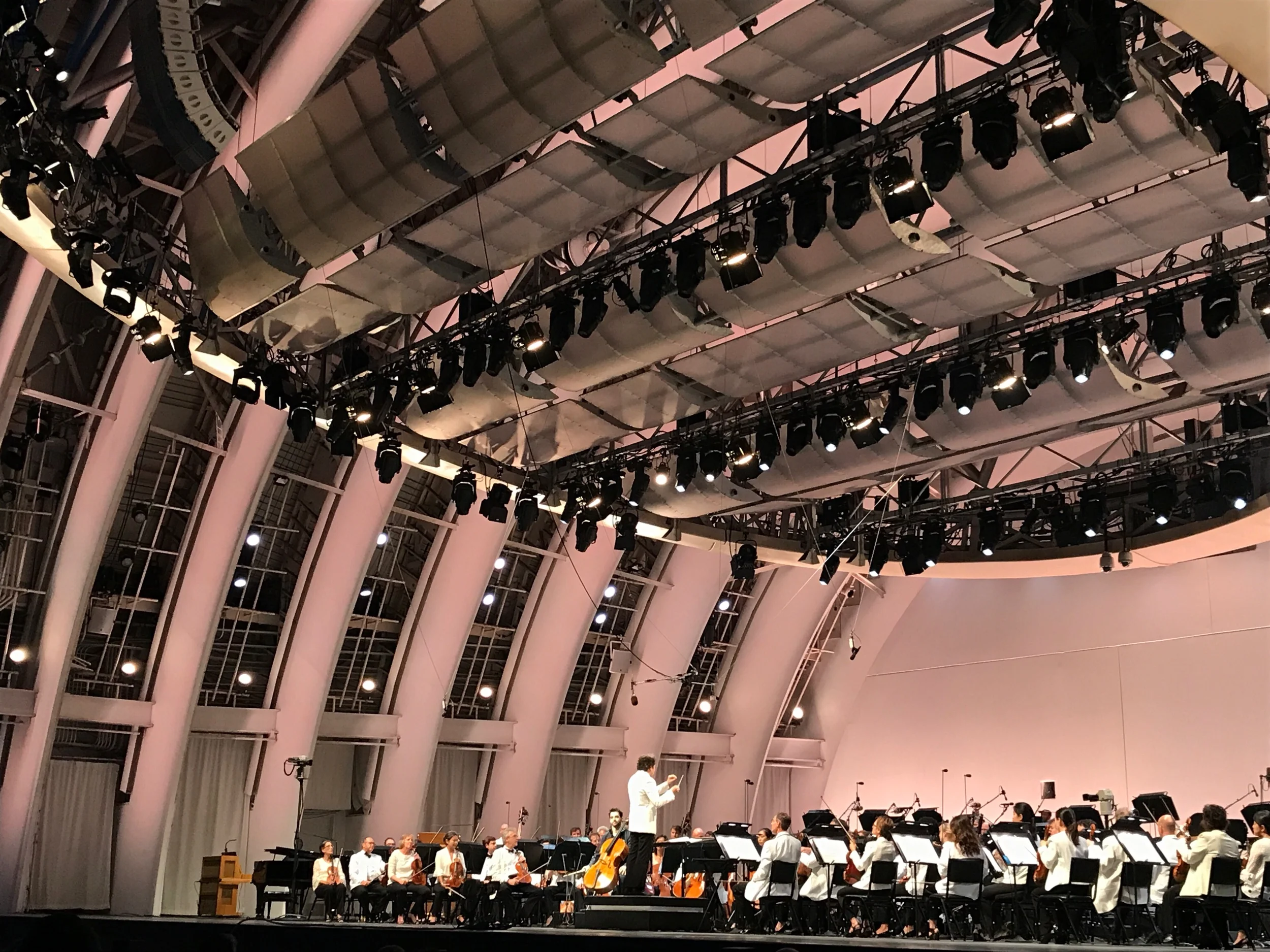
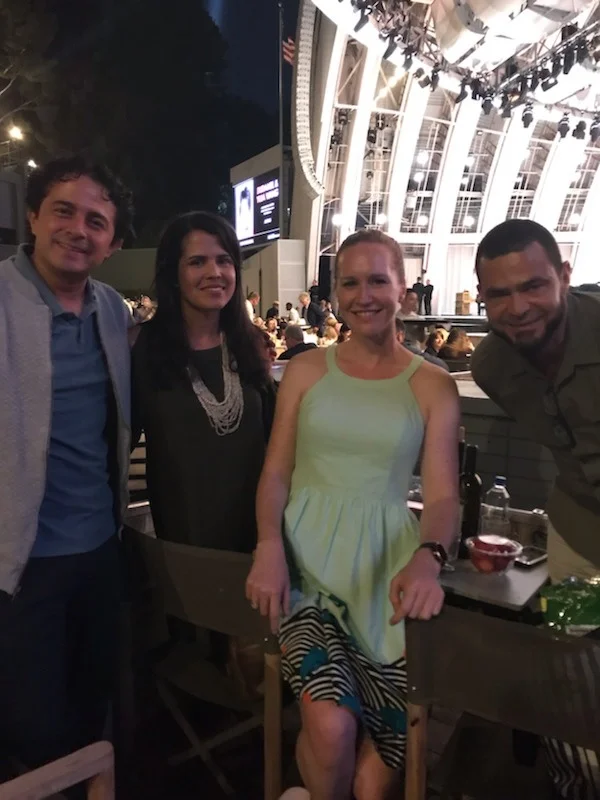
This week, unexpectedly, Maestro Juan Felipe of YOLA invited me and Caroline to join him in box seats to see the Dvorák Cello Concerto and Prokofiev's Romeo and Juliet featuring Gustavo Dudamel, cellist Pablo Ferrández, and Benjamin Millepied's choreography. I was so excited to sit close enough to see the soloist interact with Dudamel. I loved how the choreography took over the entire Bowl with fight scenes in the aisles, balcony scenes in the "lobby" areas, and party scenes in backstage storage rooms. Millepied was the cameraman (which I did not realize until later), and he made the camera work feel like part of the choreography. You watch the screens and feel intimately engaged in the drama that is taking place all around you, then turn your head and watch the action happen right beside you, then two minutes later, and it is back on the stage. While the focus was not on the orchestra, they played exquisitely – I could hear every not of those ferocious violin passages. In the words of Mark Swed from the LA Times, "This should be the future of virtual reality — not those silly headsets, pixilated video, cheapo headphones, and compressed audio." It was such a treat.
Are you interested in free tickets to the Bowl this summer? Follow me on Instagram @activeviolinist for opportunities to win tickets to upcoming performances like Yuja Wang next week!