

Sound Healing and Reiki at The Gentle Barn
I love horses so imagine my delight when Faith invited me to the Gentle Barn to give a Reiki and Sound Healing session with her. Read all about it in this blog post and check out some photos of my new friends.

Last week I had the honor and privilege of playing my violin at the Gentle Barn FOR the animals. It was magical. There was a beautiful energetic shift that occurred during my time there.
Truthfully, this was not my first time playing in a barn. In 2018, my lovely friend Doris Degner Foster interviewed me for a piece in Sidelines Magazine. I had a fun photoshoot with my violin at Sonrise Stables in Broken Arrow, OK. You can read that article and see more of the photos here.
BUT this was the first time I’ve been invited to not just pose, but play in a barn, and not for humans – for the horses. This musical offering is a career highlight for me. I love horses. I’ve learned so much from watching them, riding them, caring for them, and competing with them (not against them). They are magical, and I swear one day I will have one of my own – just putting that out in the world.
A few weeks ago, my long-time friend and Reiki healer, Faith, invited me to join her for a sound and Reiki healing session for the horses at the Gentle Barn (You may have read about my very first Reiki session ever, gifted to me by the very same Faith last summer – if not, you can check that out here). Of course, I jumped at the chance to spend time with horses. She could have asked me to come to clean out their stalls, and I probably would have said yes, so this was an extra special invitation.

Faith and I offering our energy to Whisper.
This was my first sound healing session. I asked Faith for parameters to work within – colors of clothing, types of music, moods, etc. but Faith trusted me. Before the healing session, this made me a little nervous, but it turned out to be much more enlivening.
I didn’t bring a stand. I didn’t bring any music. I came prepared to follow my intuition and play what came from my heart, through my hands. When we started, I intuitively began to move from one horse or donkey to another, gradually making my way around the barn. At first, I could feel their curiosity. Many moved closer to me and watched and listened intently. Lulu, the donkey, might have been my first real fan. She never moved to a place where she couldn't see me, and she never multitasked while I played at her end of the barn. I made my way around the barn twice. Faith moved with me as I visited each horse, providing energetic support and relief for the animals.

Playing for Lovely Lulu.
My first trip around the barn felt like an introduction. I didn’t know these beautiful animals yet, and it felt like an opportunity to say hello musically and energetically. The second time felt quite different. Each animal has such a unique soul, and while playing for each horse, I could feel their essence radiating more strongly. I tried to stay open to this, and in turn, the music I created reflected their spirit back to them. That sounds very new age, but when I silenced the "must perform" urge, I could pick up on the subtle clues that the space provided. You could see and feel some of the horses respond positively to more lively and flowing music. Others were soothed by the long, slow vibrations of a held note.
The horse I ended my playing with was Hiroka, an older mare who struggles with poor vision from previous traumas in her life. She is beautiful, but what she must have endured previously in her life breaks my heart. As I played long, slow tones for her, accentuating the resonance through subtle vibrato, I was overcome with the desire to make physical contact with her by placing my hands on her forelock. I’ve never felt so intensely called to physically connect with an animal like that. Of course, I want to pet cute dogs and love animals, but this was different. It felt like a pull from the horse and motivated less from my own desire to pet.
This was such a special experience. A heartfelt thanks to Faith, the Gentle Barn, and to the horses for being the best audience a violinist living in quarantine could ask for.
I hope others are finding ways to connect with the arts and music right now. Musicians and performers, are you finding ways to connect with audiences (literally of any kind)? I know it has been hard for me to be "sidelined" as non-essential recently, so readers of this post – tell me how I can serve you from a social distance? I'm game to try (almost) anything.
PSA:
LA Friends – I give a weekly pop up concert every Thursday evening with my dear friend Caroline Campos. We play in public parks all over the city and surrounding areas. They are free but donations are appreciated. Follow us on Instagram to find out more about times, dates, places, etc. We are @lasunsetduet

I also have a Youtube channel if you want to see a few other videos. I'm slowly adding teaching and playing materials, but let me know if you have any requests. Please subscribe to stay in the loop and see some fun stuff.
Finally, I have a Patreon page where you can subscribe at various fiscal levels to support me and my endeavors. You also get certain perks at each tier, so it is not just a selfless act of love – you get stuff in return.
Get in touch with me.

Finlandia - A Song of Peace
I wrote this blog post while thinking about my beginning orchestra students at Longfellow Elementary. It started as me arranging their orchestra music for 4 violins and then, true to form, I couldn’t help digging around and learning a little more and then writing even more about the piece. Hope you enjoy Finlandia in several different arrangements...including mine AND the Indigo Girls.

In the Fall of 2019, which feels like decades ago, I selected the Finlandia Theme for the Beginning Orchestra at Longfellow Elementary School in Pasadena, where I am a Music Director for the Harmony Project. I have fond memories of playing Finlandia in my youth orchestra days, summer festivals, and professional ensembles, so I was excited to find a simple arrangement of the theme that my group could play.
For those of you who have experience training young, beginning musicians in an orchestra setting, you might be familiar with the trials and tribulations of the rehearsal process. Things were slow going as we crafted our version for the December Concert. Still, the students shined in the performance, and during the early spring semester, regularly asked to play Finlandia. Several said it was their favorite piece. I just had to chuckle at this because the learning process did not kindle nearly this much passion for the composition. However, after they mastered it, they couldn’t stop playing it.
When Coronavirus hit, and all educational endeavors moved online – including music education – I felt so removed from many of my students. I started arranging their orchestra pieces for 4 part violins to share videos and music with them and keep their motivation high. When our online Spring Recital rolled around, I was touched to hear several students play Finlandia as their solo selection. It was so moving and a good reminder that as teachers we often plant seeds that germinate, grow, and blossom beautifully and sometimes unexpectedly…and sometimes those blooms take a little longer than expected.
In the same way that I highlighted the Theme from Jupiter when my students worked on it this Spring, I thought I would take this opportunity to dive into Finlandia and tell you a little more about it. No, I did not sing this song in school. No, I was not reprimanded for goofing off in assembly. I will admit that while I knew it was fiercely patriotic, I was naive to the fact that it was written as a response to czarist Russia in a celebration of the Finnish free press. I’m glad I learned something in this endeavor as well.
The History:
Sibelius wrote Finlandia for the Finnish Press Pension Celebration of 1899, a thinly veiled rally in support of freedom of the Finnish press, then primarily controlled by czarist Russia. Sibelius's contribution to the three-day pageant was a set of nationalistic musical tableaux. He later recycled several of these pieces into the suite, Historic Scenes No. 1, but the grand finale, originally called "Finland Awakens," became what is now known as Finlandia. The title “Finland Awakens” attracted negative attention from the czarist régime, so the piece was initially known as Impromptu. The Helsinki Philharmonic gave its first performances as Finlandia at the Paris World Exhibition of 1900.
I love that opening - don’t you? Those chords make the hair on the back of my neck stand up.
In program notes for the LA Phil, Susan Key writes,
“Like all successful symphonic poems, Finlandia’s extra-musical meaning generates the music's formal shape. The composer described this meaning in stirring words: "We fought 600 years for our freedom, and I am part of the generation which achieved it. Freedom! My Finlandia is the story of this fight. It is the song of our battle, our hymn of victory.” His genius is that this story functions simultaneously on both exterior and interior levels – capturing just that intersection where patriotism feeds personal identity and vice versa.”
What an interesting sentiment. Are there parallels in today’s world? Based on how many times this tune has been re-imagined in different contexts and with different lyrics, her words certainly strike a chord.
The Hymn
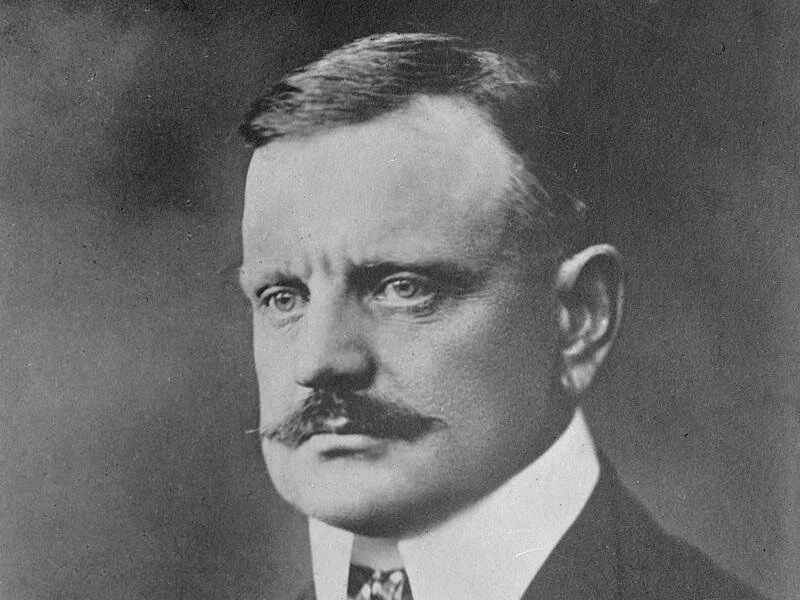
Sibelius later reworked the Finlandia Hymn into a stand-alone piece. This hymn, with words written in 1941 by Veikko Antero Koskenniemi, is one of Finland's most important national songs. Today, during performances of the full-length Finlandia, a choir sometimes sings the Finnish lyrics with the hymn section.
Finnish lyrics:
Oi Suomi, katso, sinun päiväs koittaa,
yön uhka karkoitettu on jo pois,
ja aamun kiuru kirkkaudessa soittaa,
kuin itse taivahan kansi sois.
Yön vallat aamun valkeus jo voittaa,
sun päiväs koittaa oi synnyinmaa.
Oi nouse, Suomi, nosta korkealle
pääs seppelöimä suurten muistojen,
oi nouse, Suomi, näytit maailmalle
sa että karkoitit orjuuden
ja ettet taipunut sa sorron alle
on aamus alkanut synnyinmaa.
English translation:
Oh Finland, behold, thy daylight is dawning,
the threat of night has now been driven away.
The skylark sings across the light of morning,
like the firmament itself was chiming,
and now the day the powers of night is scorning:
thy daylight dawns, oh fatherland!
Oh Finland arise, and raise towards the highest
thy head now crowned with mighty memories.
Oh Finland arise, for to the world thou criest
that thou hast thrown off thy slavery,
beneath oppression's yoke thou never liest.
Thy morning's come, motherland!
It is also sung as a Christian hymn (Be Still My Soul, Hail, Festal Day, A Song of Peace, and in Italian evangelical churches: Veglia al Mattino). In Wales, Lewis Valentine uses the tune for the patriotic hymn Gweddi Dros Gymru (A Prayer for Wales).
This is My Song / A Song of Peace
One of the more famous renditions of this hymn is "This is My Song," also known as "A Song of Peace," with lyrics written in 1934 by Lloyd Stone. It often appears in hymnals with substituted and additional verses by Georgia Harkness (1891–1974). It is sometimes called "A Song of Peace," taken from the second line of the song.
Lloyd Stone (1912 – 1993) was born in California and attended the University of Southern California as a music major, with the intent of becoming a teacher. Instead, he joined a circus bound for Hawaii and remained there for the rest of his life, writing poems and songs. "A Song of Peace" is his best-known work. He wrote Stanzas 1 and 2 when he was only 22 years old.
Georgia Elma Harkness (1891- 1974) was a Methodist theologian with a passion for poetry and the arts. Born in Harkness, New York, Georgia was a graduate of Cornell and also studied at Yale and Harvard. A trailblazer for generations of women to follow, Georgia was the first female theologist to teach in a seminary. She wrote nearly forty books in the course of her career.
Lyrics:
This is my song, O God of all the nations,
a song of peace for lands afar and mine;
this is my home, the country where my heart is;
here are my hopes, my dreams, my holy shrine:
but other hearts in other lands are beating
with hopes and dreams as true and high as mine.
My country’s skies are bluer than the ocean,
and sunlight beams on cloverleaf and pine;
but other lands have sunlight too, and clover,
and skies are everywhere as blue as mine:
O hear my song, thou God of all the nations,
a song of peace for their land and for mine.
May truth and freedom come to every nation;
may peace abound where strife has raged so long;
that each may seek to love and build together,
a world united, righting every wrong;
a world united in its love for freedom,
proclaiming peace together in one song.*
*Third stanza by Georgia Harkness.
This version was recorded and performed by many artists, including (my favorites) The Indigo Girls.
Finlandia in Pop Culture
References to Finlandia can also be found in pop culture although admittedly, I had never heard of or seen most of these (no offense to The Walking Dead or the Die Hard Series.):
Finnish film director Renny Harlin featured Finlandia prominently in the film score for his 1990 film Die Hard 2: Die Harder.
Finlandia is used in Finders Keepers, Lovers Weepers! by Russ Meyer.
Finnish symphonic power metal band Nightwish has used Finlandia as an intro to their live concerts, such as shows that are a part of their Imaginaerum World Tour.
Before joining Nightwish, Troy Donockley had already played a version of Finlandia as a guest musician for Mostly Autumn. It also appears on his album The Unseen Stream.
Joan Baez featured the Finlandia Hymn on her 2005 live album Bowery Songs. Baez's live performance also appeared on the album Mitä Vapaus, a compilation of protest songs by various artists, released by Amnesty.
On 8 December 2015, Sibelius' 150th birthday, Sibelius Academy of the University of the Arts Helsinki, gathered over 1000 people on the Senate Square to sing Finlandia.
The Walking Dead features Finlandia in episode 5 of season 7 as Sasha and Maggie awaken at Hilltop in the night to a recording of Finlandia blasting from a parked car and zombies coming in.
Sources:
https://www.britannica.com/topic/Finlandia
https://www.laphil.com/musicdb/pieces/354/finlandia
https://en.wikipedia.org/wiki/Finlandia
https://en.wikipedia.org/wiki/Finlandia_hymn
https://en.wikipedia.org/wiki/This_is_my_song_(1934_song
http://yourdailypoem.com/listpoem.jsp?poem_id=497

The Violin Music of East Germany Part III: Johannes Paul Thilman
Part 3 of my exploration of violin music from East Germany focuses on Johannes Paul Thilman from Dresden. While Thilman was very popular and celebrated during his lifetime his music has mostly been (sadly) forgotten - a shame because he wrote some wonderful violin music. I am so excited to introduce one of my new musical friends to you!
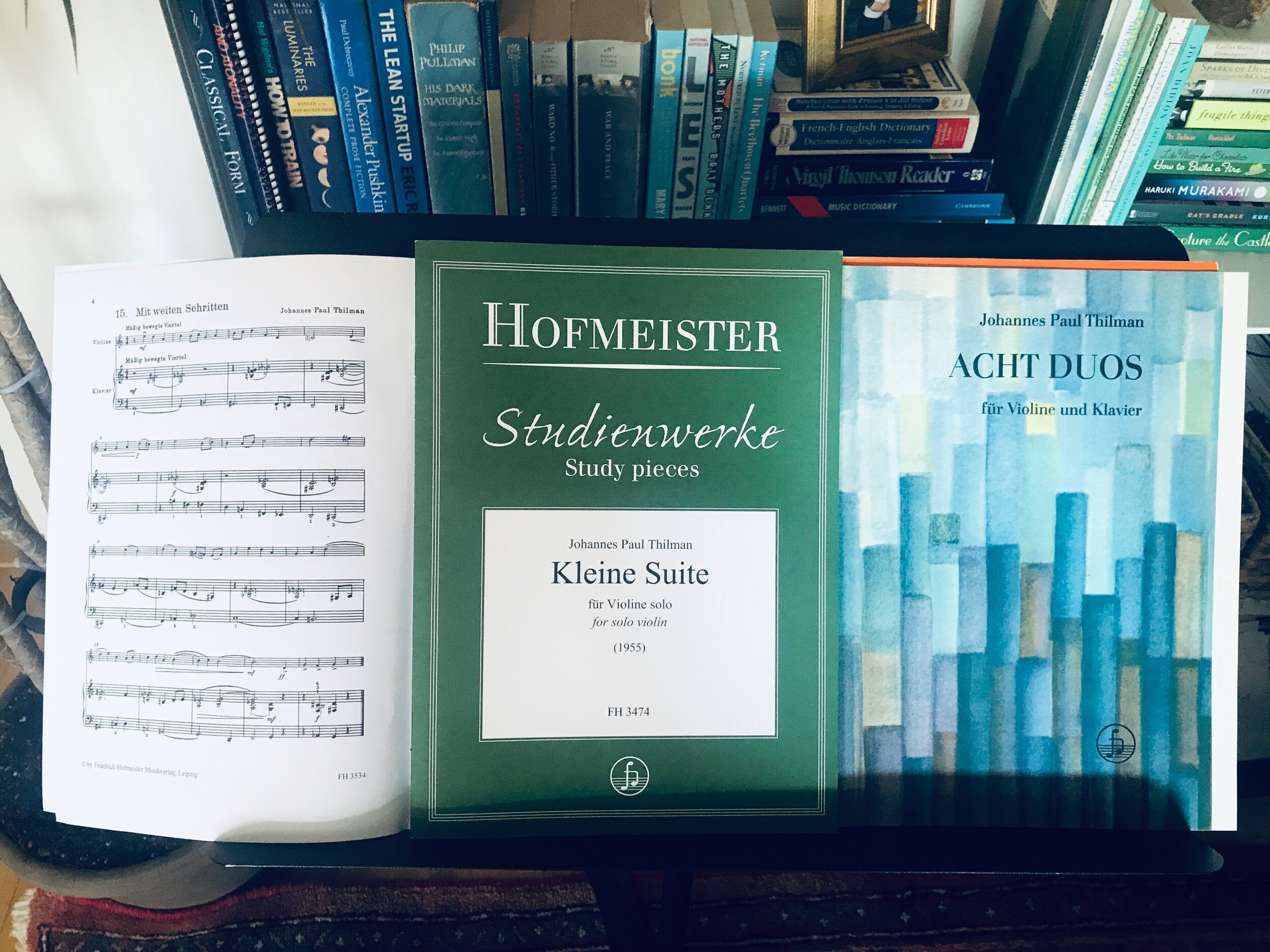
The spotlight in this installment of my East German Violin Music blog series is dedicated to Johannes Paul Thilman. While information about Thilman is quite hard to find, some of his scores were more readily available. Unfortunately for me, several of my recent acquisitions are stuck in Germany due to COVID-19 related shipping restrictions between the EU and United States. The sellers assure me that they are holding them for me and will send them as soon as the holds are lifted. I cannot wait to explore these scores and the waiting only makes my excitement grow more ferocious.
I’ll start with a few personal notes regarding my exploration of the music I already own.
I really like Thilman’s musical style and harmonies. He is considered a conservative composer and his music is reminiscent of the Romantic Era tonalities, and maybe I just like that stuff, but it fits nicely on the violin. Some works, like the 8 Duets for violin and piano, are quite simplistic and use folk-like melodies. The virtuosic technique is very manageable and makes this music well suited for younger music students. This is similar to some of Schwaen’s music – one could conceivably put together a student recital consisting solely of music from East Germany...that would be a cool history lesson/experience! The Kleine Suite for Solo violin is difficult and virtuosic in a similar way to the solo music of Bach, Prokofiev, and Ysaye. I had to sit at the piano and play through many of the harmonies to get a better sense of the sonorities. I think it is particularly challenging because I have no recordings to refer to for style, articulation, tempo, etc.
The Research:
Johannes Paul Thilman - German composer and pedagogue; b. Dresden, Jan. 11, 1906; d. there, Jan. 29, 1973.

Thilman, who actually wanted to become a teacher, encountered music at the age of 18 and was initially self-taught. He was a pupil of Hindemith, Grabner, and Scherchen and attended the Leipzig Conservatory in 1929. He also studied at the Dresden Technical Univ. During the Nazi era (1933-5) he was declared an unacceptable composer, and it was only after the fall of the 3rd Reich that he was permitted to pursue his career in earnest. In 1940, he became the instructor of composition at the "Carl Maria von Weber" School of Music (also called the Dresden Conservatory) in his hometown, Dresden. He was a professor there from the year 1956 until he became an Emeritus professor in 1968. Among his students were composers Friedrich Goldmann and Udo Zimmermann. Besides his academic activities, he was also involved in the musical life of Dresden. He was the founder-director of the “New Music in Dresden” concert series (1947-51) and later taught at the University of Dresden. Thilman went on to become the Professor of composition at the Dresden Hochschule für Musik beginning in 1965.* In 1960, he was the recipient of the coveted National Prize of East Germany.
*these schools listed above may be related in some way. I’m not 100% certain about the University/Conservatory setup in Germany and how it may have changed.
His academic publications include, Probleme der neuen Polyphonie (1949), Neue Musik: Polemische Beiträge (1950), and Musikalische Formenlehre (1952).
Among his compositions are 7 symphonies and other orchestral works, chamber music, choral works, piano pieces, and numerous works for school and “domestic use” (I assume this means to be sang or played at home by amateur musicians?).
During his life, his 4th Symphony was very popular. It really is beautiful - as are the images in the video.
Musical Style:
Thilman was a conservative Composer. His music is tonal and refers to the form and harmony of Romantic music. His melody is always catchy and uncomplicated. Thilman was particularly inspired by folk music. This influence can be heard clearly in many of his works. Most of his works are short. Generally, his tone is fresh and uncomplicated rather than dramatic. Undoubtedly, Thilman oriented his works towards the aesthetics of the Socialist realism.
~Just in case you need a refresher on Socialist Realism, here is what Wikipedia says:
Socialist realism is a style of idealized realistic art that was developed in the Soviet Union and was the official style in that country between 1932 and 1988, as well as in other socialist countries after World War II. Socialist realism is characterized by the glorified depiction of communist values, such as the emancipation of the proletariat.
In his later works, he often chose unusual settings and freer forms for his works. Thilman was very respected in East Germany. Today, however, he is mostly forgotten. This last point seems to be sad but true for many composers in East Germany, even those that were popular, famous, or highly regarded. The quest to find his music and information about him has been surprisingly limited, and as I said at the beginning, his scores are some of the easier ones to find. I’ll be sharing clips of his work on social media soon so make sure to follow me on Instagram (@activeviolinist ) to watch some of those stories.
Repertoire I am looking for:
Solos:
Concerto for Violin and Orchestra Op. 59, 1952 FOUND – stuck in Germany
Lichtenberger Konzert for violin and string orchestra, 1958
Concerto for Violin and Chamber Orchestra, 1972
Sonata No. 1 for Violin and Piano Op. 50 FOUND – stuck in Germany
Sonata No. 2 for Violin and Piano Op. 80
Kleine Suite for Solo Violin, 1955 ACQUIRED
Sonatine for Violin and Piano Op. 82 FOUND – Stuck in Germany
8 Duos for Violin and Piano ACQUIRED
Duo Drama for Violin and Piano
Chamber Music:
Sontatine for String Quartet Op. 49
String Quartet No. 1
String Quartet No.2, 1954
Piano Quartet No. 2 Op. 70
Piano Quintet, 1955
String Quartet No. 3 in D major Op. 81
String Quartet No. 4 “in einem satz” Op. 84, 1958
Piano Trio, 1963
Dramatische Szenen for String Quartet, 1969
Kammerspiel for String Quartet, 1970