
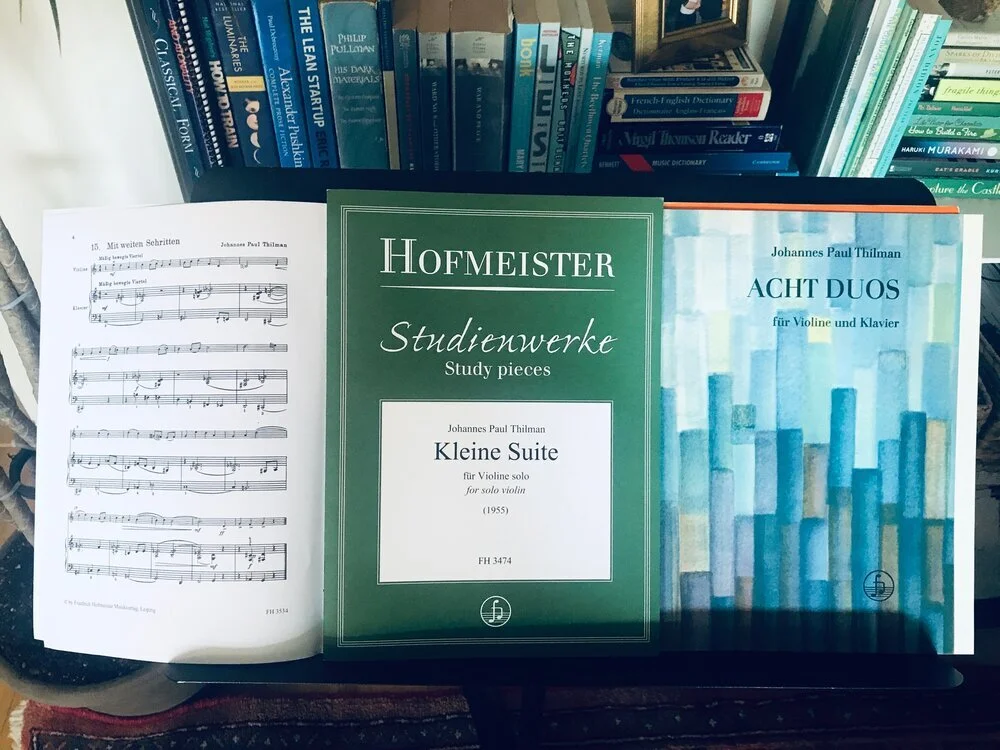
The Violin Music of East Germany Part III: Johannes Paul Thilman
Part 3 of my exploration of violin music from East Germany focuses on Johannes Paul Thilman from Dresden. While Thilman was very popular and celebrated during his lifetime his music has mostly been (sadly) forgotten - a shame because he wrote some wonderful violin music. I am so excited to introduce one of my new musical friends to you!
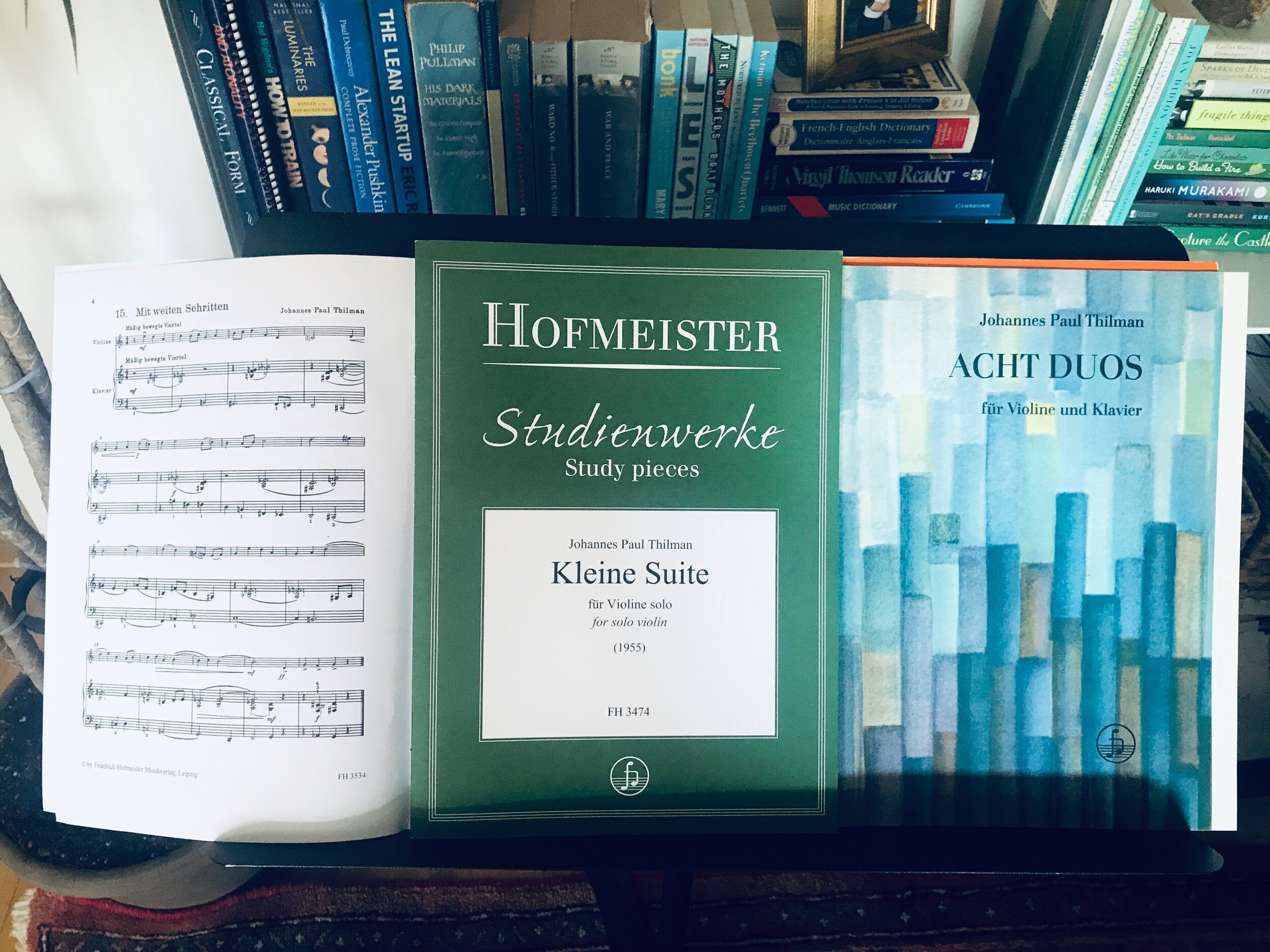
The spotlight in this installment of my East German Violin Music blog series is dedicated to Johannes Paul Thilman. While information about Thilman is quite hard to find, some of his scores were more readily available. Unfortunately for me, several of my recent acquisitions are stuck in Germany due to COVID-19 related shipping restrictions between the EU and United States. The sellers assure me that they are holding them for me and will send them as soon as the holds are lifted. I cannot wait to explore these scores and the waiting only makes my excitement grow more ferocious.
I’ll start with a few personal notes regarding my exploration of the music I already own.
I really like Thilman’s musical style and harmonies. He is considered a conservative composer and his music is reminiscent of the Romantic Era tonalities, and maybe I just like that stuff, but it fits nicely on the violin. Some works, like the 8 Duets for violin and piano, are quite simplistic and use folk-like melodies. The virtuosic technique is very manageable and makes this music well suited for younger music students. This is similar to some of Schwaen’s music – one could conceivably put together a student recital consisting solely of music from East Germany...that would be a cool history lesson/experience! The Kleine Suite for Solo violin is difficult and virtuosic in a similar way to the solo music of Bach, Prokofiev, and Ysaye. I had to sit at the piano and play through many of the harmonies to get a better sense of the sonorities. I think it is particularly challenging because I have no recordings to refer to for style, articulation, tempo, etc.
The Research:
Johannes Paul Thilman - German composer and pedagogue; b. Dresden, Jan. 11, 1906; d. there, Jan. 29, 1973.

Thilman, who actually wanted to become a teacher, encountered music at the age of 18 and was initially self-taught. He was a pupil of Hindemith, Grabner, and Scherchen and attended the Leipzig Conservatory in 1929. He also studied at the Dresden Technical Univ. During the Nazi era (1933-5) he was declared an unacceptable composer, and it was only after the fall of the 3rd Reich that he was permitted to pursue his career in earnest. In 1940, he became the instructor of composition at the "Carl Maria von Weber" School of Music (also called the Dresden Conservatory) in his hometown, Dresden. He was a professor there from the year 1956 until he became an Emeritus professor in 1968. Among his students were composers Friedrich Goldmann and Udo Zimmermann. Besides his academic activities, he was also involved in the musical life of Dresden. He was the founder-director of the “New Music in Dresden” concert series (1947-51) and later taught at the University of Dresden. Thilman went on to become the Professor of composition at the Dresden Hochschule für Musik beginning in 1965.* In 1960, he was the recipient of the coveted National Prize of East Germany.
*these schools listed above may be related in some way. I’m not 100% certain about the University/Conservatory setup in Germany and how it may have changed.
His academic publications include, Probleme der neuen Polyphonie (1949), Neue Musik: Polemische Beiträge (1950), and Musikalische Formenlehre (1952).
Among his compositions are 7 symphonies and other orchestral works, chamber music, choral works, piano pieces, and numerous works for school and “domestic use” (I assume this means to be sang or played at home by amateur musicians?).
During his life, his 4th Symphony was very popular. It really is beautiful - as are the images in the video.
Musical Style:
Thilman was a conservative Composer. His music is tonal and refers to the form and harmony of Romantic music. His melody is always catchy and uncomplicated. Thilman was particularly inspired by folk music. This influence can be heard clearly in many of his works. Most of his works are short. Generally, his tone is fresh and uncomplicated rather than dramatic. Undoubtedly, Thilman oriented his works towards the aesthetics of the Socialist realism.
~Just in case you need a refresher on Socialist Realism, here is what Wikipedia says:
Socialist realism is a style of idealized realistic art that was developed in the Soviet Union and was the official style in that country between 1932 and 1988, as well as in other socialist countries after World War II. Socialist realism is characterized by the glorified depiction of communist values, such as the emancipation of the proletariat.
In his later works, he often chose unusual settings and freer forms for his works. Thilman was very respected in East Germany. Today, however, he is mostly forgotten. This last point seems to be sad but true for many composers in East Germany, even those that were popular, famous, or highly regarded. The quest to find his music and information about him has been surprisingly limited, and as I said at the beginning, his scores are some of the easier ones to find. I’ll be sharing clips of his work on social media soon so make sure to follow me on Instagram (@activeviolinist ) to watch some of those stories.
Repertoire I am looking for:
Solos:
Concerto for Violin and Orchestra Op. 59, 1952 FOUND – stuck in Germany
Lichtenberger Konzert for violin and string orchestra, 1958
Concerto for Violin and Chamber Orchestra, 1972
Sonata No. 1 for Violin and Piano Op. 50 FOUND – stuck in Germany
Sonata No. 2 for Violin and Piano Op. 80
Kleine Suite for Solo Violin, 1955 ACQUIRED
Sonatine for Violin and Piano Op. 82 FOUND – Stuck in Germany
8 Duos for Violin and Piano ACQUIRED
Duo Drama for Violin and Piano
Chamber Music:
Sontatine for String Quartet Op. 49
String Quartet No. 1
String Quartet No.2, 1954
Piano Quartet No. 2 Op. 70
Piano Quintet, 1955
String Quartet No. 3 in D major Op. 81
String Quartet No. 4 “in einem satz” Op. 84, 1958
Piano Trio, 1963
Dramatische Szenen for String Quartet, 1969
Kammerspiel for String Quartet, 1970
How Does Your Garden Grow?
I’ve been thinking about community recently. Who is in it? How do we interact? What do we need? The best analogy I could come up with - and I’ve committed a lot of thought to this - is a garden. Think about all the most beautiful gardens you’ve ever seen in the world. What do they have in common? How can you translate that to your community?
Mary, Mary, quite contrary,
How does your garden grow?
With silver bells, and cockle shells,
And pretty maids all in a row.

Social distancing transformed how we interact with each other and how we define our inner circles, friends, and community. The recent devastating social events instigated by the outrage surrounding #justiceforgeorgefloyd pushed these musings into sharp focus. I’m sharing some of my ponderings here in case you have input, ideas, thoughts, and opinions you would like to share.
This is NOT:
A blog post telling you how to live your life
Me passive-aggressively lecturing you or judging you about your choices.
A political statement condemning or supporting any political candidates.
I know that things are politically heated right now, and I am not trying to fuel that fire, merely to offer my thoughts on MY actions and intentions. At least, how I want to move forward and interact with others.
A little bit about Me:
I am a violin player and teacher
I am not a politician
I am not a gardener or horticulturist
I am not perfect
I have room to grow
So….
I've been thinking about the notion of community. When everything transitioned online, I found myself (like everyone else) suddenly without many in-person interactions. Everything that had been easy about maintaining friendships and relationships suddenly took effort. All of a sudden, I was exhausted by too much screen time, and if I wanted to talk to friends from yoga class or my neighbor – things that used to be easy and practically built into my day - I had to make a concerted effort. I found myself expending so much mental energy fostering relationships that used to happen so organically. That in-person time turned into screen time - both productive and unproductive - and it made me question who is in my community? How do I interact with them? What do I want or need from my community? And how do I fit into their community? (along with many other things).
Now that I can't be lazy about answering these questions, it is actually quite interesting, and I realized that my community is pretty big and includes people I do and don’t know.
Here is a simplified list of my community as I see it right now and in no particular order:
MY family
My private students and their families
My YOLA Students, colleagues and their families
My Harmony Project students, colleagues, and families
Family friends
My friends on social media
My followers on social media (yes, they can be different depending on the platform and your sharing intent)
Readers of my blog
Subscribers to my Newsletter
Local friends
Close friends who live far away
Colleagues from various professional endeavors across the globe
Former Students and their families
Former colleagues
People I follow on social media
Writers and Bloggers that I follow and read
People I watch and follow on Youtube (is this different from social media? I'm not sure, but it feels different for me).
My teachers, current and former
Politicians – national and local - I watch and follow (and if I don't, the ones making decisions that affect me)
Celebrities, musicians, and creators that I admire
My physical neighbors - physically. The ones who live next door to me.
Local businesses I support.
Large companies and brands I use and buy from
Did I leave anyone out? Even if I did, that is a lot of people – and I'm not even that popular. When you look at this list and think about it, there are potentially thousands of people in MY community. Your list would be similar, but it would center around you.
Then there is the question of how can somebody be part of my community if they don’t know who I am? This comes down to the type of relationship you maintain with these people, brands, content. As I'm sure any marketing expert would tell you, there is a multitude of ways to influence and engage with individuals. I define my community generally, as everyone I receive information from or give information to. This changes my perspective on who is "included" in my circle.
Active and Passive Relationships and Interactions.
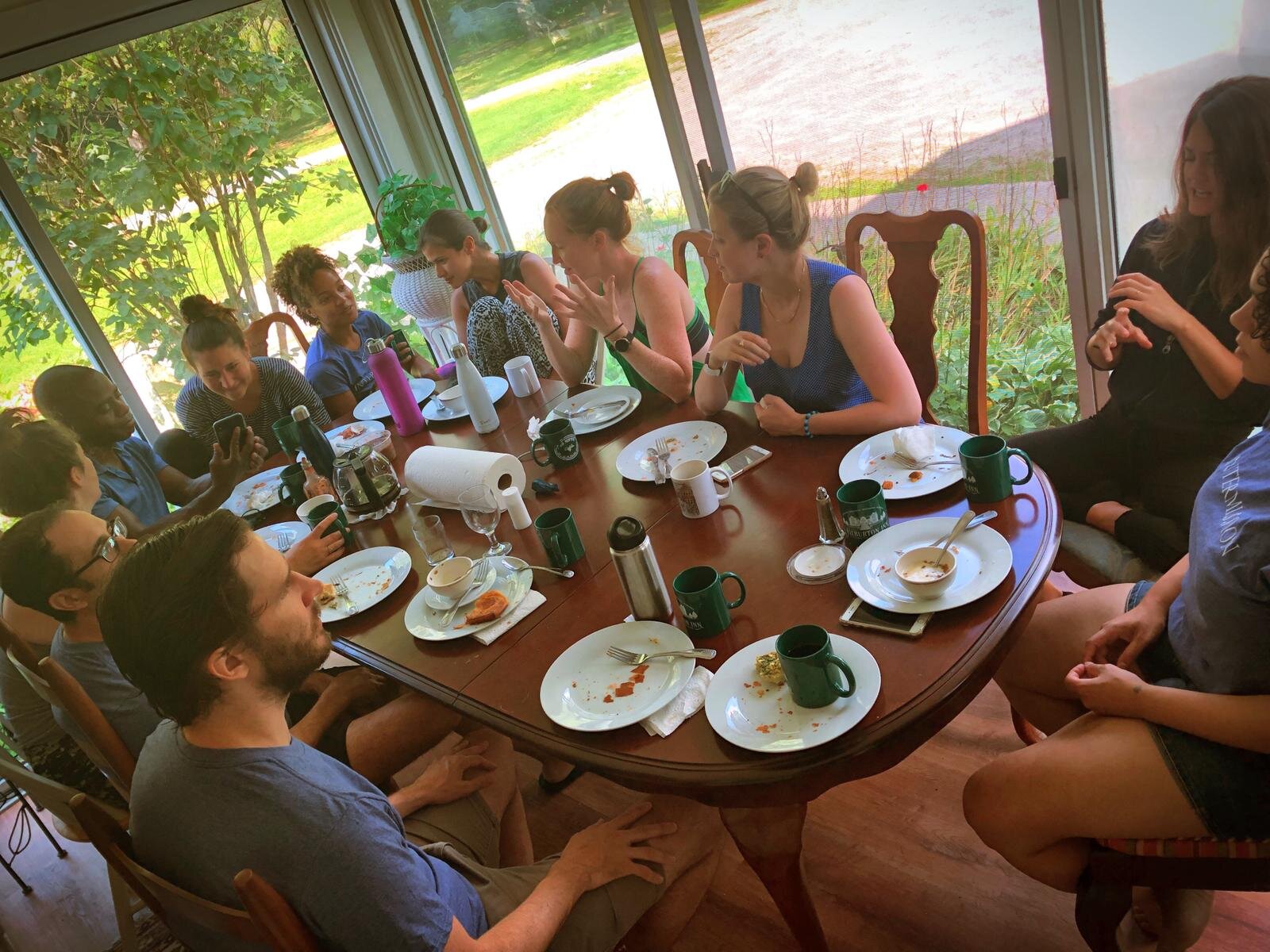
Think about active and passive interactions. When you scroll through social media, you are taking in information from a multitude of content creators, but you don’t necessarily interact directly with these accounts and people. You might not double tap or comment on every post you see. In fact, some people you follow might now know who you are. How many companies have your email address and advertise to your inbox. How many strangers do you follow on Instagram? How many Youtube videos do you watch? I consider these to be different forms of passive interaction. You are not actively participating in that person's life. Still, you are absorbing their content, opinions, values, aesthetics, information, and how they WANT to present it (and this is important because the HOW can can conjure dramatically different results).

An active interaction, these days at least, is a zoom call, a telephone call, text messages, comments, chats, communications with that person in a direct, and hopefully reciprocated way. You have to actively engage these people and put some effort into the relationship. Some relationships fall under both categories: I follow some people AND arrange zoom calls with them. The same could be said about my community list above. Several of these groups fall under more than one category (friends on social media who are also colleagues, for example).
When you zoom out (get it?) and realize how many people are in your life for all sorts of reasons, do you think you can agree and relate entirely and absolutely with all of them? Of course not. I know that is not possible from personal experience. We are all different, and that should be celebrated.
So when it comes to community, how can we live, grow, AND THRIVE together?
Life is a garden, and you are the gardener.
I've been thinking about this nonstop. Maybe it is the multitude of beautiful blooms that have taken over Los Angeles. These days (since lockdown, really), I walk around in awe of the diversity of foliage in this city. Around every corner, there is a scent or a color that I fall head over heels in love with. Whatever got me started on the garden idea, what I like about the analogy to my human community is the following:


A gardener is judged by the quality and diversity of life in the garden. Nobody celebrates the gardener who only grows a small amount of something reasonably well. Similarly, you are not a successful gardener with a wide variety of dead flowers growing in your patch.
As a gardener, your pride comes from the success of the blooms and life around you. YOU made or at least helped that happen. And this puts the onus and responsibility on the gardener to cultivate growth.
Some plants nourish you in return, but many do not. Either way, you tend to your garden.
Every flower, vegetable, tree, or fruit in your garden requires a different diet of nutrients for success.
The larger and more diverse your garden, the more beautiful and coveted your garden is, and the more successful a gardener you are.
You do not yell at a flower for not growing or failing to bear fruit. Instead, you wonder what you can do differently to elicit growth from this plant.
Some plants are beautiful to look at. Some smell like heaven. Some are delicious to eat, and others provide shade. Some offer benefits to others indirectly and often in a way that you must foster, but will never reap the immediate benefits from. Some do a few of these things, but none (to my knowledge) do all of those things.
Old plants can and do grow harmoniously alongside young life similar to trees and perennials planted in the same garden.
It takes a multitude of different and similar plants growing bountifully to make a successful, beautiful garden. You cannot plant 45 daisies and consider it a success if only one of them grows. Beating the odds in a garden is not success. It means the conditions were wrong.
So, how does your garden grow? Are you tending to your blooms with equal love and attending to their hugely diverse needs? Are you prioritizing their growth? Are you comfortable with the different needs of your garden? What does that even mean to you?

I'll use myself as an example for one small yet very diverse part of my garden. I am a teacher. I spend many hours every week working with students, thinking about them, worrying about them, talking about them, interacting with them, preparing materials for them, and communicating with their families. There is no possible way that I could fully understand the perspective of every student I teach. Yet, it is my responsibility to help them grow and thrive as musicians and as citizens in their communities. How can I do this? Is this even possible?
Simply put, of course, it is possible! As long as I’m not forcing them into a mold that doesn’t fit their growth. When you start working with a beginning student, there is no way to determine where their musical journey will take them, and it is not my job to decide their goals for them. My job is to provide them the musical nutrients and tools to help them on their journey. Sure, I can help them navigate the path. I can help push them towards their goals. But I cannot force a daffodil to be an apple tree. I cannot force a musician to play with a specific shoulder rest, for example, because it is what I use, ESPECIALLY if it causes pain (which would block their growth in some way). I can’t expect them to do something the way I do it because that assumes they want to grow up and be me - and we all know that is impossible.

There are more than just violin student flowers in my garden that need tending…
I am the gardener in my garden, and if that is the case, my job is to help blooms blossom. My job is not to determine how high, or how big, or in what direction they can or should grow. My goal is to keep them from waning, dwindling, or dimming. I cannot yell at a flower to grow. I cannot harass and shame it into bearing fruit. I cannot NOT tend to it and be confident that my garden will be opulent. I can’t plant it in nutrition-less soil and expect it to overcome the odds.

I know that nature is resilient, as are people, and will bloom and grow in the most surprising places, but that is not something you can count on. Not every flower gets that lucky.
Conversely, if I overwater my garden, or mess with it too much, it can have the same effect. In the garden, a certain level of trust for the process, coupled with care and attention, is the best equation for success. But again, I want to remind you that I am not actually a gardener.
How is this reflected in YOUR life? How is this reflected in MY life? How can we foster this type of growth and success in our communities?
I’m not talking about any specific political climate. I’m talking about our daily actions, behaviors, interactions, social media posts, etc. What messages are you spreading to your active and passive communities? Do they elicit growth? Does it help others grow, or does it block them in some way? Are you supporting the businesses in your community? Do you check in with your friends and family? Do you celebrate the successes of others publicly or privately?
I’m not perfect, but I am trying – I’ve been on a journey since my wakeup call with Brene Brown to examine myself, my life, and how I fit into my community. It started with the considerations of what I can and should offer my students and has evolved from there. I get mad. I get furious. I stomp around my apartment and rant about trivial things and historically relevant events that really piss me off. I am human. But when I express these things to my community, I am trying – now more than ever - to be mindful about how I can do that in a way that doesn't enrage others, that doesn't seek to cause harm to anyone but instead aims to help us all grow. If I spark intense feelings in you, ask yourself how you can turn that into your own growth. This is what I try to do. How can I take this sharp pang and turn it into the mirror I need to examine myself and help others?
I don't like it when I feel accused, shamed, or assaulted. It does not help me grow, learn, and evolve. And if we're honest with each other as fellow gardeners tending to our bounty, isn't that what we want? Don't we want to help each other grow? Above all else, aren't we all trying to grow as people, flowers, artists, etc.?
As the gardener of your community, help me.
I’m genuinely asking you. Can you reflect on your own garden and give me tips about how you foster growth in your passive and active communities? What does this type of gardener approach mean to you?
You are welcome to disagree, and I encourage a discourse, but please be mindful – if you are reading this, we are part of the same garden, and if I am in your garden, how, as the gardener, are you going to engage in a dialogue that helps me grow.

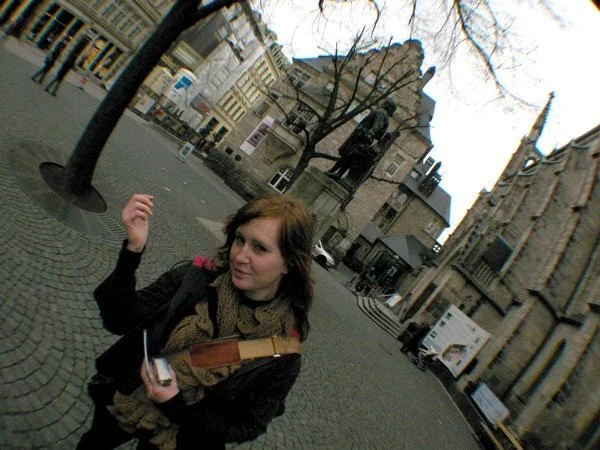
Finally Sharing My Quarantine Playlist
Finally getting around to sharing my quarantine playlist with the world. Too bad there is only one song on it. The Bach Chaconne in D minor is holding major space in my life so I just couldn’t help myself. I needed to share it with you. Welcome to my current obsession. Join me on this wild, baroque ride.
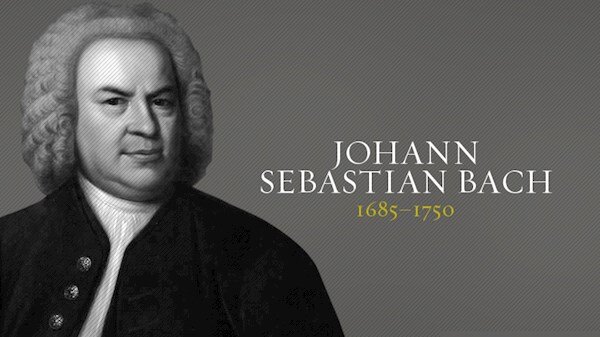
I keep seeing people sharing their playlists and I wanted to share mine too so I started thinking about what music I’ve been listening to lately. So I started thinking about what I’ve been listening to over the last few weeks and realized I’ve been listening to books and the Bach Chaconne…and that’s pretty much it. So I thought I would share a little bit about the piece like I did with the Tzigane several years ago when I was borderline obsessed with that piece. Plus, my mom told me she enjoyed listening to all the different versions and surely she can’t be the only one, right?
I referenced this piece in my Silver Linings Post a few weeks because I’ve finally mustered the courage to work on it but now it has turned into more of an obsession. I know that not everyone who reads my blog is a violinist so here is some history, theory, and a whole bunch of performances so you can see for yourself what is so great, and also so you can see how it can sound so different depending on who is playing it, but still so fantastic.
First of all, what is a Chaconne?
According to everyone’s favorite research tool, Wikipedia:
A chaconne is a type of musical composition popular in the baroque era when it was much used as a vehicle for variation on a repeated short harmonic progression, often involving a fairly short repetitive bass-line (ground bass) which offers a compositional outline for variation, decoration, figuration and melodic invention. In this it closely resembles the passacaglia.
The ground bass, if there is one, may typically descend stepwise from the tonic to the dominant pitch of the scale; the harmonies given to the upper parts may emphasize the circle of fifths or a derivative pattern thereof.
What about THIS Chaconne?
The encyclopaedia Britannica has this to say about Bach’s famous work:
The Chaconne forms the longest movement of the piece by far, making up roughly half of the entire partita. It draws upon the Baroque dance form known as a chaconne, in which a basic theme stated at the opening is then restated in several variations. In Bach’s Chaconne, the basic theme is four measures long, short and simple enough to allow for 64 variations. From a stern and commanding mood at the beginning, Bach gradually increases the complexity of his theme, mixing in various compositional effects. Some twists upon the theme are spacious and grand; others flow nimbly. Fast runs and large interval skips are frequent, requiring much dexterity from the performer. Bach also calls forth changes in emotional intensity, as some variations are dominated by long notes and others by many, more urgent short notes. Bach builds up his work over 256 measures, finally restating the theme at the end with new, even stronger harmonies.
A Little History:
Bach composed the chaconne sometime between 1718 and 1720. Historians speculate that Bach composed it after returning from a trip to find his wife (and the mother of seven of his children) Maria Barbara dead and buried.

According to the obituary co-authored by Carl Philipp Emanuel and Bach student Johann Friedrich Agricola, Maria Barbara's death in 1720 was sudden and unexpected. Bach was at the Carlsbad spa accompanying his employer, Prince Leopold of Anhalt-Köthen, when she died. When Bach left Köthen, Maria Barbara was in perfectly good health; but when he returned two months later, he was shocked to learn that she had died and been buried on 7 July. The cause of her death is undocumented. Professor Helga Thoene proposed that Bach's famous Violin Partita No. 2 (especially the final "Chaconne" movement) was written as a tombeau for Maria Barbara, however these claims are controversial.
Professor Thoene’s line of thinking resonates with the modern listener. A few summers ago while I was studying with violin teacher extraordinaire Felicia Moye at summer camp, I was introduced to Professor Thoene’s theory. It shines such a poignant and moving light on the piece, that it was composed in response to the death of his wife. There is so much emotion contained in the music that it demands a story. Otherwise, it leaves us all wondering “why” and “how.”
In the excellent article titled, “The New Mythologies: Deep Bach, Saint Mahler, and the Death Chaconne,” author Michael Markham gives some context to our modern notions, and the evolution of those ideas. Here are a few excerpts that wonderfully sum up the concept:
Artists of the early 1700s did not wear their lives on their sleeves, and we do not invest the era with particular psychocultural significance. Their goal was not to expose the hidden and the personal but to replicate the empirical and the universal; their domain was not the unconscious but the observable world. Whatever “truth” might be recoverable about the original motivation behind the Chaconne will be rooted in that culture, not ours. To be a canonical work, however, means to outlive your birth era, and so the Chaconne has undergone a number of emotional transformations since Bach’s lifetime.
There is no evidence that Bach himself considered the Chaconne to encode an entire vista of the universe or to sound out his own emotional depths. Such Romantic notions would never have occurred to a court composer who had trained in the late 1600s as a Lutheran town organist. Creating art then and there was not an act of personal expression but one of civic or religious service. Of course emotions could be depicted and messages delivered. But musicians of Bach’s generation did not need to feel an emotion in order to depict it. It was the next generation, beginning with Bach’s own son Carl Philipp Emanuel, who began to demand that a musician express emotions in a way we would call “authentic”:
The aspirations, motivations, and meanings that have since accrued to Bach’s works, and in particular to the Chaconne, have been filtered through others — Brahms, Busoni, and Stokowski — and are not Bach’s but theirs and ours. But to say this is not to dismiss such meanings. I experience them, enjoy them, rely on them in my own listening. There is no crime in that, nor any mistake or shallowness. It is inevitable, normal, and necessary. That is consumption history. We select it because it pleases us. We change it so that it can continue to please us.
Speaking of Brahms… in a letter to Clara Schumann, he described the Chaconne like this:
“On one stave, for a small instrument, the man writes a whole world of the deepest thoughts and most powerful feelings. If I imagined that I could have created, even conceived the piece, I am quite certain that the excess of excitement and earth-shattering experience would have driven me out of my mind. If one doesn’t have the greatest violinist around, then it is well the most beautiful pleasure to simply listen to its sound in one’s mind.”
Back to Markham….
The Chaconne had become both broader (“a whole world”) and deeper (its “emotional tension” putting your very psyche at stake). Brahms wrote this while reworking Bach’s violin piece as a left-hand-only piano étude, a process that for him bordered on the mystical. In the century since Bach’s death, Kant, then Beethoven, had given us the Romantic sublime, and musical composers had become philosophers-in-notes. For the Romantics, a great piece of art was a psychological sucker punch, knocking loose some terrifying unconfronted truth. The technical grandeur of Bach’s Chaconne (and his newfound role as Großvater of German music) had given it Himalayan stature — immovable, ancient, a platform from which to survey the universe. Brahms was not the last to approach it this way.
In his article, Bach and Clinical Care: a proposition, Dr. John Edmund Spicer, a medical doctor, advocates for listening to the Bach, and specifically the Chaconne to be a better doctor.
“When we as clinicians listen to something as profound as the Chaconne, we are hearing the transmuted emotions of a great composer to which we respond emotionally and interpretively: we have two ways of responding. And that is just the same sort of task we face when listening to the stories of our patients, particularly the complex patients. I suggest the two areas of activity help each other.”
Some performance perspective:
In his book Violin Dreams, legendary violinist Arnold Steinhardt talks at length about the Chaconne, and his lifelong relationship with the piece. Below is an excerpt which I think beautifully sums up the violinists personal relationship with a piece that has taken on mythic proportions.
As far as I could see, my first task was to figure out how best to combine these ever-changing variations cohesively. I had not forgotten Isaac Stern's advice in violin camp years ago: think of the Chaconne's variations as occurring in groups, so that the evolution of thought and feeling unfolds convincingly. At the outset my course seemed relatively clear, since the early variations all came as matched pairs in which the second of each could be treated as a simple response to the first. But every now and again a lone variation would appear, begging me to direct it somewhere. These orphans vexed me. Did each belong with the next or the previous pair, or did they stand alone to freshen the palate between courses? The basso ostinato also perplexed me. This recurring bass line was supposed to do just that — to repeat endlessly without significant alteration and to serve as the work's distinctive theme. Yet Bach refused to stick consistently to the bass template he fashioned for the beginning and chose rather to draw from several quite distinctive and different ones.
Another characteristic trait of a chaconne is a regularly repeating harmonic structure. Here again I could easily recognize not one but three or four different patterns. It was as if Bach had begun a card game with hard-and-fast rules that he then changed at whim again and again during play. Even the most easily identifiable element of a chaconne, a dance-related emphasis on the second of the bar's three beats, appeared only sporadically. If I were to dance the Chaconne, where and how would I place my feet when the stress was not on the second beat?
I decided to put past considerations aside for the moment and try to look at the bigger picture. The Chaconne was divided into three large sections. The dark and brooding outer sections flanked a hymnlike inner one that evoked peace, gratitude, and optimism. Was it far-fetched to think that Bach, a devout Christian, might have offered the Chaconne as an expression of the Holy Trinity, its bedrock spiritual principle? The first section, in D minor, would represent the Father; the next, in D major, the Son; and the final section, in D minor, the Holy Spirit. This line of thought intrigued me, even though I was on shaky footing as a secular Jew with only the flimsiest knowledge of Christianity. The more I looked, however, the more "threes" I found. The Chaconne's basic building block was a three-beat bar, the initial theme appeared three times — at the beginning, the middle, and the end — and then there were those evocative three-note groups that appeared over and over again. Was the Chaconne some kind of message in a bottle destined for (dare I think it?) God?
Excerpted from Violin Dreams, by Arnold Steinhardt (Houghton Mifflin, October 11, 2006).
So, do you want to hear it now? This first video was created by 14 violinists during lockdown and it was kind of the impetus for writing this post. The rest of these are performances I think are incredible and/or are historically of note. I do have a favorite, but I’m not going to tell you which one it is. Can you guess?
(Interesting to note that Midori’s video was filmed where Bach wrote the Chaconne - how cool is that?
Sources:
https://en.wikipedia.org/wiki/Partita_for_Violin_No._2_(Bach)
https://en.wikipedia.org/wiki/Maria_Barbara_Bach
https://www.britannica.com/topic/Chaconne-by-Bach
https://onbeing.org/blog/the-story-behind-bachs-monumental-chaconne/
