
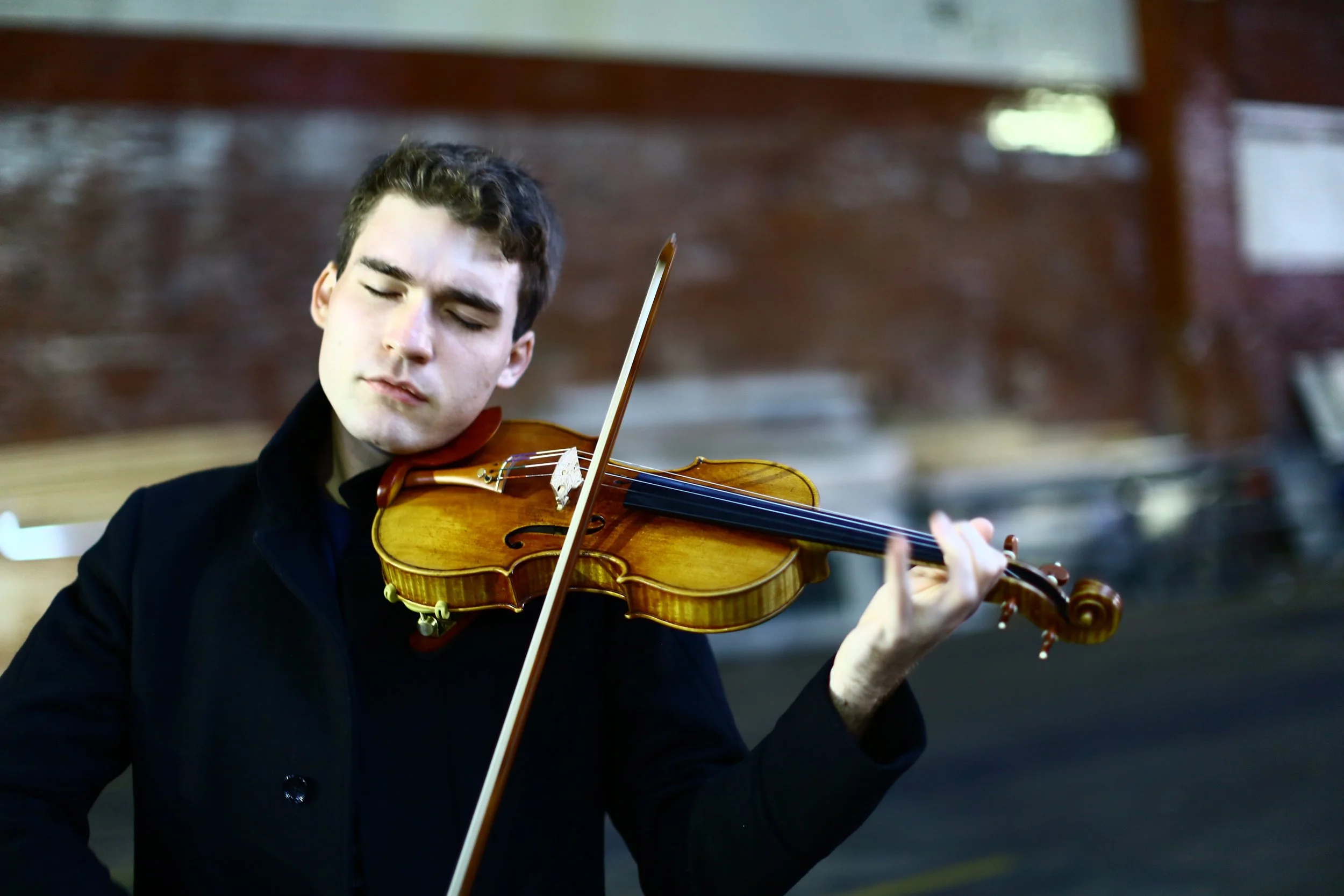
Mini-Series Part V: Alexi Kenney
The final installment of my Mini Series is here. Featuring Alexi Kenney with SoNA and Maestro Paul Haas.
This (final) installment in my season-long series is a few weeks late. Oops! Sorry about that!
The first weekend in March, Alexi Kenney performed the Sibelius Violin Concerto with the Symphony of Northwest Arkansas (SoNA) and Maestro Paul Haas.
I was super excited about this concert. The program included The Sibelius Violin Concerto, Beethoven Symphony #5, and Fratres by Arvo Pärt. I adore all of these pieces, and until the week we received our music I was jumping with excitement assuming we would play the solo violin version of Fratres (see my fairly recent Music Mondays Blog Post titled Fratres).
The Sibelius Concerto has long been one of my absolute favorites, and incidentally, the only instrumental concerto that Sibelius ever wrote.
Here is what the ever so scholarly Wikipedia has to say:
The Violin Concerto in D minor, Op. 47, was written by Jean Sibelius in 1904, revised in 1905. It is his only concerto. It is symphonic in scope, with the solo violin and all sections of the orchestra being equal voices. An extended cadenza for the soloist takes on the role of the development section in the first movement.
Sibelius originally dedicated the concerto to the noted violinist Willy Burmester, who promised to play the concerto in Berlin. For financial reasons, however, Sibelius decided to premiere it in Helsinki, and since Burmester was unavailable to travel to Finland, Sibelius engaged Victor Nováček (1873–1914), a Hungarian violin pedagogue of Czech origin who was then teaching at the Helsinki Institute of Music (now the Sibelius Academy). The initial version of the concerto premiered on 8 February 1904, with Sibelius conducting. Sibelius had barely finished the work in time for the premiere, giving Nováček precious little time to prepare, and the piece was of such difficulty that it would have sorely tested even a player of much greater skill. Given these factors, it was unwise of Sibelius to choose Nováček, who was a teacher and not a recognized soloist, and it is not surprising that the premiere was a disaster. However, Nováček was not the poor player he is sometimes painted as. He was the first violinist hired by Martin Wegelius for the Helsinki Institute, and in 1910 he participated in the premiere of Sibelius's string quartet Voces intimae, which received favorable reviews.
Sibelius withheld this version from publication and made substantial revisions. He deleted much material he felt did not work. The new version premiered on 19 October 1905 with Richard Strauss conducting the Berlin Court Orchestra. Sibelius was not in attendance. Willy Burmester was again asked to be the soloist, but he was again unavailable, so the performance went ahead without him, the orchestra's leader Karel Halíř stepping into the soloist's shoes. Burmester was so offended that he refused ever to play the concerto, and Sibelius re-dedicated it to the Hungarian "wunderkind" Ferenc von Vecsey, who was aged only 12 at the time. Vecsey championed the work, first performing it when he was only 13, although he could not adequately cope with the extraordinary technical demands of the work. The first time Sibelius himself conducted the revised version was in 1924, in Stockholm, at the same concert as the premiere of his Seventh Symphony.
The initial version was noticeably more demanding on the advanced skills of the soloist. It was unknown to the world at large until 1991, when Sibelius's heirs permitted one live performance and one recording, on the BIS record label; both were played by Leonidas Kavakos and conducted by Osmo Vänskä. The revised version still requires a high level of technical facility on the part of the soloist. The original is somewhat longer than the revised, including themes that did not survive the revision. Certain parts, like the very beginning, most of the third movement, and parts of the second, have not changed at all. The cadenza in the first movement is exactly the same for the violin part.
Pretty interesting stuff!
The first interpretation of this concerto I remember listening to regularly was recorded by Anne Sophie Mutter. That was many (many) moons ago. When I hear that performance now, it feels so nostalgic - like the first time you did anything with enthusiasm, it forever holds a special place in your heart but these days, even though I don't turn to this recording first, I still listen to it on occasion.

Back to Alexi...
When SoNA first announced the 2016/17, I was unfamiliar with the name Alexi Kenney. So in preparation, I did a little research (aka internet stalking).
Here is a slightly abbreviated bio from his website www.alexikenney.com

The recipient of a 2016 Avery Fisher Career Grant, violinist Alexi Kenney has been praised by the New York Times for “…immediately drawing listeners in with his beautifully phrased and delicate playing.” His win at the 2013 Concert Artists Guild Competition at the age of nineteen led to his critically acclaimed Carnegie Hall debut recital at Weill Hall.
He has given recitals at the Kennedy Center in Washington, D.C., Jordan Hall and the Isabella Stewart Gardner Museum in Boston, Napa’s Festival del Sole, Chicago’s Dame Myra Hess series, and the Mondavi Center for the Performing Arts, and he has been featured on Performance Today, WQXR-NY’s Young Artists Showcase, WFMT-Chicago, and NPR’s From the Top. Recent concerto engagements include the Santa Fe Symphony, Las Vegas Philharmonic and Roswell Symphony in New Mexico, the Hofheim Academy Orchestra in Bad Soden, Germany, and the NEC Philharmonia at Symphony Hall in Boston in a performance of John Adams's Violin Concerto with Hugh Wolff.
Chamber music continues to be a focus of Alexi"s life, touring with Musicians from Marlboro and Musicians from Ravinia's Steans Music Institute and regularly performing at festivals including Caramoor, “Chamber Music Connects the World” at the Kronberg Academy (Germany), ChamberFest Cleveland, the Lake Champlain Chamber Music Festival, Marlboro, Music@Menlo, Open Chamber Music at Prussia Cove (UK), Ravinia, and Yellow Barn. He has collaborated with artists including Pamela Frank, Miriam Fried, Gary Graffman, Steven Isserlis, Kim Kashkashian, Gidon Kremer, and Christian Tetzlaff.
He is the recipient of top prizes at the 2012 Yehudi Menuhin International Competition, the 2010 Mondavi Center Competition, and the 2013 Kronberg Academy master classes. He was praised by Strings magazine for his “beautiful, aching tone” for a performance of the Sibelius Concerto with the China Philharmonic Orchestra in Beijing during the Menuhin Competition.
Born in Palo Alto, California in 1994 and currently residing in New York, Alexi Kenney received his Bachelor’s of Music degree from the New England Conservatory of Music in Boston, where he is currently the only violinist in its selective Artist Diploma program. At NEC he studies with Donald Weilerstein and Miriam Fried on the Charlotte F. Rabb Presidential Scholarship. Former teachers include Wei He, Jenny Rudin, and Natasha Fong.
In layman's terms, Alexi is a young and rising star with a massive career ahead of him.
What struck me as particularly interesting was the performance excerpts he includes on his website. I had just been listening to one of my favorite podcasts, Meet The Composer, hosted by Nadia Sirota, where she interviews Kaija Saariaho, and it sent me on a quest to acquaint myself with more of her music. I ran into her piece for violin and electronics called Frises. It is so cool - I even went so far as to look up some images of the score - yikes it is hard! You can read more about the piece here OR Saariaho's own program notes here. All this to say that Alexi Kenney includes recordings of 2 movements of this piece on his website, along with a few other contemporary, and 20th-century works. I increasingly admire performers who choose to perform and endorse contemporary composers. A Champion of the Present, is often how I think of them, and I admire their investment in the music that is shaping the future. I recommend exploring the recordings on Alexi's website.
http://www.alexikenney.com/listen/
I ended up running into him at a local coffee shop in Fayetteville, and we chatted for a little bit. It turns out that the week before, he was serving as guest concertmaster of the Pittsburgh Symphony, where -small world- the assistant conductor, Andres Franko, also happens to be the music director of the Signature Symphony in Tulsa where I am the Associate Concertmaster. Sometimes the music world is crazy small! It was fun to share that little connection and chat about the differences and challenges of performing as an orchestral musician, chamber musician, and soloist, life in Brooklyn and on the road (he travels to perform almost constantly), cheap tickets at the Met and Carnegie Hall, good coffee, and yummy food around town.
I really loved Alexi's interpretation of the Sibelius. The guy has bow control for days! I was so relieved NOT to be on the front stand for this performance so I could relax a little bit and watch him perform. On his website, Kenney includes a performance quote from the New York Times that reads;
"a spellbinding, thoroughly honest performance that revealed his architect’s eye for structure and space and a tone that ranges from the achingly fragile to full-bodied robustness”.
This is spot on. His musical pacing is exact: effortlessly exciting, and convincingly unique. I loved his 3rd movement, which, all of a sudden seemed to be infused with an almost Latin groove. I had never even thought that could be a thing with this piece. A war horse of the violin repertoire, I heard Kenney's performance and just couldn't believe how it danced and grooved in a completely new and refreshing way. Donald Tovey refers to the third movement as a "polonaise for polar bears" but this had something a little more sizzling about it.
The video above is a few years old, and I think his tone is much more blazing now but unfortunately I could not find a more recent performance of the Sibelius. The 3rd movement starts roughly 10 mins from the end, but I recommend savoring the entire performance.
As a perfect compliment, Alexi performed Piazzolla's Tango Etude #3 as an encore. Oh man was it fun!
Not to sound biased, BUT, this may have been my favorite violin performance of the season. What a treat to hear, and meet a violinist at the beginning of an exciting career, playing one of the greatest pieces in the repertoire.
I can't wait to see where Alexi's Career takes him.
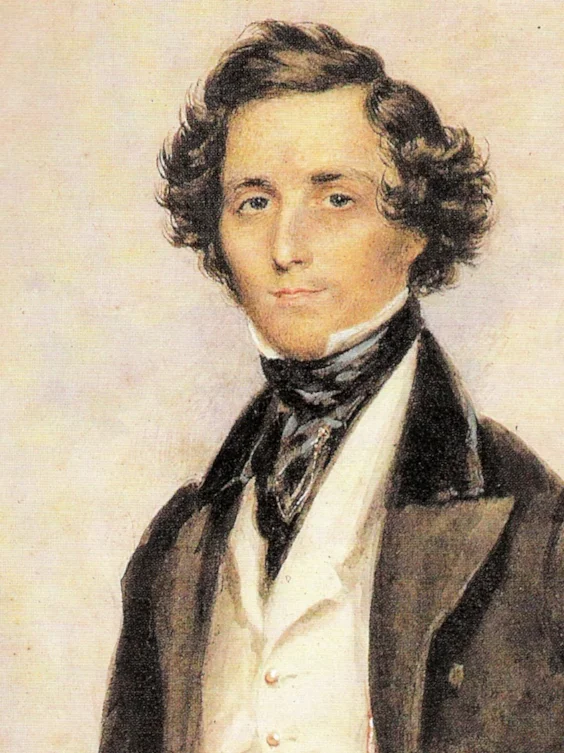
Music Mondays - Mendelssohn Violin Concerto in E Minor Op.64
Felix Forever!
My favorite violin concerto was premiered on this day 172 years ago.
Wowee how time flies!
Written with barely enough time to be considered Monday...
This week's gem is one of my all time favorite violin concertos.
Premiered on this day, March 13, 1845 by Ferdinand David, it seemed a perfect fit for this week's Music Monday.
I love the combination of Classical finesse and Romantic expression that simmers throughout the entire piece. Heifetz, Perlman, and Nathan Cole all deem this concerto one of the most challenging in the repertoire citing the flashy (and very exposed) violin solo that happens immediately - no chance to warm up, no orchestral introduction, just wham bam fireworks straightaway!
Check out what the Scholars ;) at Wikipedia have to say about it.......
The concerto is innovative in many respects. In the first movement alone, Mendelssohn departs from the typical form of a Classical concerto in many ways, the most immediate being the entry of the soloist almost from the outset.
Although the first movement is mostly in the conventional sonata form, Mendelssohn has the first theme played by the solo violin and then by the orchestra. Classical concertos typically opened with an orchestral introduction followed by a version of essentially the same material that incorporates the soloist.
The cadenza is also novel in that it is written out as part of the concerto and located before the recapitulation. In a typical Classical concerto, the cadenza is improvised by the performing soloist and occurs at the end of a movement, after the recapitulation and just before the final coda. Mendelssohn's written cadenza was not included in the first published version of the concerto, but instead a "streamlined" version by Ferdinand David without the contrapuntal complexity of the original. This is the most played version today.
The violin concerto stands out from previous concertos with its connected movements. There is no break between the first and second movements, with a bassoon note held between the two. The bridging passage between the last two movements begins almost immediately after the slow movement. The melody is similar to that of the opening, which hints at the cyclic form. The linking was designed to eliminate applause between movements. This would have come as a surprise to Mendelssohn's audience, who, unlike today's, were used to applauding between movements.
The concerto also calls on the soloist to be nothing more than an accompanist to the orchestra for extended periods, such as the ricochet arpeggios at the start of the recapitulation. This too was novel for a violin concerto of its time.
Legacy
Mendelssohn's Violin Concerto influenced the concertos of many other composers, who adopted aspects of it in their own concertos.
For example, the unusual placement of the cadenza before the recapitulation is reflected in the violin concertos of Tchaikovsky (where the cadenza is similarly placed) and Sibelius (where the cadenza serves to extend the development section). Moreover, following this concerto it was very rare for a composer to leave a cadenza unwritten for the soloist to improvise as in the days of Mozart and Beethoven. The linking of the three movements also influenced other concertos, such as Liszt's Second Piano Concerto.
The concerto itself was an instant success, warmly received at its premiere and well received by contemporary critics. By the end of the nineteenth century, the piece was already considered one of the greatest violin concertos in the repertoire. It would become one of Mendelssohn's most popular pieces, and was still regularly performed, even when interest in his music declined in the early twentieth century. In 1906, the year before his death, the celebrated violinist Joseph Joachim told the guests at his 75th birthday party:
The Germans have four violin concertos. The greatest, most uncompromising is Beethoven's. The one by Brahms vies with it in seriousness. The richest, the most seductive, was written by Max Bruch. But the most inward, the heart's jewel, is Mendelssohn's.
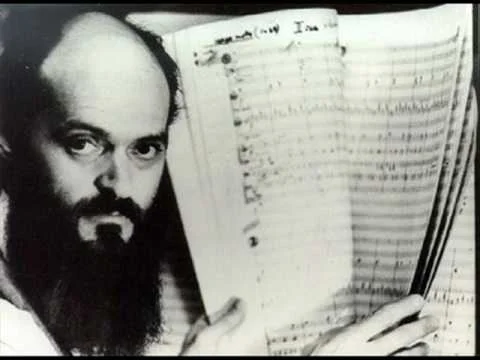
Music Mondays - Fratres
Is it Monday already?!
In honor of the SoNA concert this past weekend; my musical offering this week is Fratres by Arvo Pärt for violin and accompaniment.
Silly me, when I first saw the program for our most recent concert, I assumed that our guest soloist, a young violinist named Alexi Kenney, would be performing this awesome piece. I completely forgot that there exists a version (the original, actually) for string orchestra and percussion WITHOUT solo violin.
In fact, I did not know that Fratres is ‘three-part music, written in 1977, without fixed instrumentation’ and there are about 17 different versions listed on the Wikipedia page. Fratres is a “mesmerizing set of variations on a six-bar theme combining frantic activity and sublime stillness that encapsulates Pärt’s observation that ‘the instant and eternity are struggling within us’.”
The following films feature Fratres in their soundtracks:
- 1987 film Rachel River
- 1997 German film Winter Sleepers
- 2005 six-part BBC documentary Auschwitz: The Nazis and the ‘Final Solution’ produced by Laurence Rees, used the composition performed in 1997 by the Hungarian State Opera Orchestra, conducted by Tamás Benedek
- 2006 film La Morte Rouge directed by Victor Erice
- 2007 film There Will Be Blood directed by Paul Thomas Anderson
- 2013 film To the Wonder directed by Terrence Malick
- 2013 film The Place Beyond the Pines directed by Derek Cianfrance
- 2013 teaser trailer for the film A Single Shot, starring Sam Rockwell
- 2013 film Violette directed by Martin Provost
- 2015 film Le Club directed by Pablo Larraín
So here is my favorite version of the piece ~
....and here is the version we performed
P.S. I have started a Spotify playlist of all of the music listed in these posts. Please follow or subscribe to it, as I will be updating it weekly with every Music Monday Post on the Blog. I set that account up pre-Active Violinist so search for the user okmurray and the playlist is titled “Active Violinist – Music Mondays.”
Enjoy!