

The "Brené Brown Made Me Feel Things" Post
I made the Brené Brown plunge last week with The Power of Vulnerability and have been watching and listening to everything I can get my hands on since. I realized that I harbor so much shame around my professional life and in order to find the success I truly want, I need to get to the bottom of it, and unpack it. This is step one in that direction. It is personal and vulnerable in a way that I don’t often share.
Warning! This is a vulnerable post. I don’t usually share my feelings with the Internet abyss, but this is an outpouring of feeling that I can finally articulate. I'm using this as a place to make sense of it.

I’m talking about shame. Professional Shame.
I know I’m late to the Brené Brown party, but I’m finally here. I recently listened to all 6-ish hours of The Power of Vulnerability over 2 days, and it rocked and is still rocking my world. I’m not sure why it took me this long. Maybe I was just resisting the inevitable. Perhaps deep down, I knew that these would be lessons that I needed to be ready for.
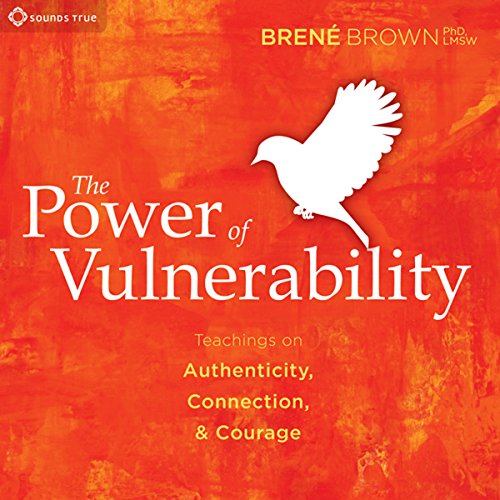
If you’ve ever seen or heard Brené Brown speak, you know that she is exceptionally engaging, funny, charismatic, and articulate. You laugh just as much as you learn, and you have so many “Oh! Me too!” moments when she shares personal anecdotes and stories from the research. It is incredible to hear her share such vulnerable stories so candidly in a way that unites the audience. You’re not laughing at her, you’re chuckling knowingly with her.
Over 6 hours, Brown frequently returns to the role of shame in our lives and the difference between shame and embarrassment. She emphasizes shames central role in the problems we have individually and collectively. I was shocked by my physical reaction to some of the explanations and stories of shame. I realized that these feelings have surrounded my music-making for years. But instead of shame, I've understood it as "not good enough."
I could write about this for years. But when did this start? I can’t think of the last interaction I’ve had with a colleague where someone said or did something that suggested my playing was worthy of shame. Yet, the voice inside me is constantly reminding me that I am not worthy.
How did it get like this?
The Power of Vulnerability made me realize that I feel shame when I don't win, or when I'm surrounded by musicians with fancier resumes, or even admitting to these feelings. I can feel myself flush with the shame of not achieving just writing that last sentence. I have never before considered any of these feelings as shame. I would simply turn the mirror around and chastise myself for not being better. Then, I would practice more, work harder, sign up for more “tests” and feel the same feelings. Shame was manifesting itself in a tight loop of never feeling good enough and always like I had to prove myself. I'm still tempted to slip into this cycle. It is like a terrible security blanket.
But why?
I am just starting to unpack these emotions and patterns, but I've realized that for many years I was taught to feel shame about my playing. I studied with the same violin teacher in high school as in graduate school. It wasn't until after I left his studio the second time that I realized he “motivated” me with shame. This is complicated because the relationship between a teacher and student is extremely personal, and the dynamic in a private lesson is never the same between two lessons or two students. As much as I'd like to think that I treat my students entirely equally, there will never be a uniform interaction between myself and each student that I teach. It is impossible. However, there is knowing a student and fostering a healthy working relationship. Then there is knowing a student and manipulating them.
I’m not sure if our interactions were as clouded when I was in high school and it escalated when I returned to his studio, or if it had always been like that. When I look back, I see the patterns that emerged out of working together over many years. Always, there was the idea that I had to be better, so I didn't embarrass myself or him. He mocked me in studio class in front of my peers. He would purposely embarrass and shame me in front of the string faculty. He told me it was my fault if I didn’t win an audition. He asked a guest artist to address the fact that I "freaked out" and couldn't control myself in performances (he actually said this at a masterclass while I was on stage).
I remember my cheeks flushing, and my knees locking as I braced against that public attack. In fact, while I often braced against it and – in public – appeared stable and unaffected, I was crumbling. When I played for him, his response was often, "Really? That's how you're going to play that?" or "Why are you playing like that? Nobody plays like that." He commented on my body, and he publicly criticized the clothes I wore. I was critiqued harshly if I followed my own musical (and eventually research) interests, so I started "whitewashing" my playing. I worked so hard to play only what was on the page. I removed my musicality and allowed him to tell me exactly how I should play the music. I realize now that I was bracing against him and putting up a wall for emotional safety.
I should have seen this as an indication of an unsafe learning environment. When we finally parted ways, it was not pretty, and I ultimately reported him to the dean of the music school. In our last interaction, he told me that I was too sensitive, and I always had been. I was so cut by that. I understood it to mean that I was weak. That I couldn’t’ handle it and all of my failures and shortcomings were my fault. I was ashamed. These feelings were coded into my violin playing. I left his studio and limped through the end of my Doctoral degree. I would never dare to diagnose him, but I realize now that he taught from a position of fear. His own shame tainted and tarnished his teaching, causing damage to his students. I’ve never typed this out before, and I’ve never spoken so boldly about this to the music community at large, but I know that I am not the only student he treated like this and I wonder if they harbor the same feelings that I do.
For years after leaving his studio, I did so much to prove to myself that I could do things. I could win auditions. I could perform. I could keep going. I was fine. I was over it. I was “healed.” I certainly was not too sensitive. But this nagging voice inside me was always reminding me of my shame. It would whisper, “You’ll never be able to play this. You’ll never be good enough to perform it, not like a real violinist,” and I would return to the shame and perfectionist cycle of continually working to prove myself. I was the most diligent technical exercise practicer, metronome user, and rule follower. But I was also a particular type of hard-work avoidant. I was the most diligent "don't express yourself" player, and in reality, that is freaking impossible…and really, what is the point?
This is about:
I’m not saying this book has made me a better violinist. I’m merely confessing to breathing a weird sigh of relief that I finally understand the feelings that surrounded my violin playing. My career. My profession. I'm guessing this must be similar to what it feels like to finally get a diagnosis after years of struggling. Like “oh my god, its not me. I’ve been trying so hard to fix a problem that is bigger than myself.”
This is not a story of assault. There was no predatory sexual behavior. This is not a story for the #MeToo movement. This is the realization that shame played a role in shaping me as a musician. I can finally see that. In my musical training, there are long patterns of associating failure with shame, and that is incorrect. Failure is something to learn from, not something to rip apart the joy of why you wanted to make music in the first place. I know that this teacher is not solely responsible for these feelings. But I also know that a mentor who motivates with shame is not helping his students grow.
About one year ago, I got my musical mojo back. Some things became crystal clear. Projects I had to work on, avenues of interest that I needed to explore, places I needed to go, people I needed to collaborate with suddenly leapt into focus. My purpose as a teacher became obvious; The most important thing I can do for my students is to create a safe place in their lives to develop, engage, and explore. Something that I now realize, shockingly, I had ripped to shreds every week of my life for years.
I have big goals that I finally feel ready for and in order to move forward, I have to shed this straightjacket. I realize this now. This is just phase one of phase one of phase one of the work I need to do.

It has been about a week since I finished the book, and I am now listening to Dare to Lead. I’m trying to pull all the pieces apart and examine them in an attempt to heal the cracks. I’m finally ready to make peace with this and use it to guide me, like a "what not to do" list. I will probably be unpacking this for years, and sometimes on this blog, but it is necessary. Musical shame is something I don’t wish on anybody. It is like a cancer of your joy. It eats away at what is beautiful about making music and leaves you feeling less than. And there is simply no place in this world for that type of disease.
I hope this resonates with you. I would love to know your story. Please share.

The Violin Music of East Germany, Part I
I hinted about this in my Resolutions post for 2020, but here is the first of probably many posts on my latest musical project. I have been deep in the stacks of music from the GDR turning up violin repertoire and chamber music that has fallen through the musical cracks of the universe, at least as far as I can tell. Read all about what I am up to and follow along to hear more about the characters I am acquainting myself with these days.

If you read my New Years Resolution post, you know that one of my goals for the year is to dive into the seemingly forgotten musical world of the former GDR. Already, I have gone way beyond my professional comfort zone with this project. I have reached out to so many sources, some of whom I have never met, some who have been dear friends for years, and one who will be my musical boss, probably for the rest of my life (oh hey Andreas!)

In case you need a geography refresher
I became absolutely fixated on this project last April when I was back in Leipzig for the first time in 10 years to perform with my old band A Whisper in the Noise. I used to tour in Europe frequently, but I never had the time to explore very much because we moved from show to show arriving a few hours before the performance, and leaving early the next day. This time was different. Jeff and I made the decision to explore Leipzig, Potsdam, and of course, Berlin. I knew about East Germany. I knew WHERE it was, I knew about the wall, and I knew the basic outsiders cheat sheet about the region. Through touring and playing music, I know some incredibly talented musical friends from the area. But actually, when I thought about it, I really didn't know anything about that corner of Europe after World War II. What really happened? What was life really like? I started staring at maps and thinking about the wealth of music that poured out of that place. Bach, Felix and Fanny Mendelssohn, Clara and Robert Schumann, Mahler, and Wagner, to name just a few, all spent time there. I realized that when the war ended, and the wall went up, I knew virtually nothing about the cultural and musical landscape of the GDR. Nothing. It was like radio silence to the US, at least as far as I can tell.

The flag
When I came home from our travels, I started casually googling things with the hopes of turning up a bunch of scores, recordings, names, performers, etc. I assumed that I would receive an at-home history class full of youtube videos, current yet unknown to me recordings, and easily accessible scores. What quickly became apparent was that composers and performers existed (and some still exist), but their music has fallen through some weird cracks in the musical universe. I found names, even a Wikipedia page dedicated to the topic. Still, when I looked for scores, I could find very few available for rent, purchase, or free download. This seems weird and wrong, right? Where did these people and their music go? Either I am the worst millennial in the world who can't do an internet search to save her life (which is possible), or somehow they have been forgotten. Welcome to the beginning of my obsession. If I could do another Doctorate, this would make for an incredible project. But alas, I guess I'll just devote all of my free time to it instead.

A guitar case sticker from the EOM20 festival last April in Leipzig.
In the late Autumn of 2019, I attended the Medea Insurrection exhibit at the Wende Museum in Los Angeles, I asked the Chief Curator what he thought about my idea. He gave me his card and told me to contact him immediately. We sat down for a meeting the following week, and he gave me several resources to contact, avenues to pursue, and ideas to follow up on. Since then, I have been chipping away at this project. I have contacted libraries in Germany, reached out to curators in Los Angeles, emailed cultural and research institutions on both sides of the Atlantic. I have slowly compiled a list of people AND found scores, although not necessarily the same. I am just a few steps into a deep rabbit hole of not new music.
My musical project is to uncover, perform, and record as much violin repertoire and string chamber music written by composers from the GDR as I can. So far, my research has brought up musicians from all over the musical and political spectrum. Over the next few months (or weeks, or maybe even days depending on the coronavirus situation), I will be sharing some of my findings here, so stay tuned.
Regarding this project, I am always looking for help with the following:
composers that fit the above criteria,
libraries with resources that you can help me access,
friends who own weird old music collections that could maybe help, and you could put me in touch with
google wizards and wizardry
financial assistance (know of any grants, residencies, scholarships, etc.?)
Musicologists who are experts on the topic
Musicians interested in collaborating/helping
German friends (or friends of friends) who could help with a little translating, on the ground leg work, resource finding, etc.
anything else that comes to mind
I would greatly appreciate any and all help. This is truly a musical "community building" endeavor. Just the sort of thing that I absolutely adore but is so much more rewarding when everyone gets involved.

Performance Highlight - Parasite at the Ace
Just a quick Hello! I’ve been a busy bee already in 2020 but one of the coolest things I’ve done so far was a performance of the movie Parasite at the Theatre at the Ace Hotel last month with the director and composer. If you haven’t seen the movie yet, you absolutely should - it is insane! A big thank you to the Hollywood Chamber Orchestra for including me in such an awesome experience - It’s so Metaphorical!
Wow - the beginning of February flew by (actually, pretty much all of 2020 has flown by so far)!

Outside the Theatre after the show. This line means so much more now after Parasite swept the awards this year.
I’ve been trying to plug away at my goals and resolutions while also maintaining a busy performing and teaching schedule, which got much busier this year (for which I am so excited and grateful). I wanted to hop on here quickly and highlight a really cool performance opportunity that I took part in last month and encourage everyone out there who hasn’t seen the movie PARASITE yet to go see it! I’m no movie buff, and I definitely haven’t seen most of the films nominated for Oscars this year - this might be something I should work on especially because of where I currently live - but I did have the incredible opportunity to perform at a screening of the movie at the Theatre at the Ace Hotel in January featuring live orchestra conducted by the composer, Jaeil Jung, with opening remarks by the director, Bong Joon Ho, to a sold out crowd. It was pretty cool.
Prior to rehearsal, I had seen the previews online and thought it looked cool but didn’t actually see the movie until the dress rehearsal and then again during the performance and WOW! It is amazing. I remember turning to another violinist on rehearsal break and saying something like “this movie is so quirky and bizarre” and then watching the rest of the movie with my mouth gaping open the entire time in full disbelief of what I was watching. I don’t want to give anything away, but if you haven’t seen it, go watch it. It takes some unexpected turns, and is equal parts funny and horrifying on so many levels and for so many different reasons.
Parasite won the Oscar for:
Best Picture
Directing
International Feature Film
Original Screenplay.
“It’s so Metaphorical!”

Backstage before the show.
See you soon! I’ll be back on here soon, I promise - there are lots of exciting things happening behind the scenes around here.