
Music Mondays - Duo Caprice
This week, enjoy Peter Schickele's Duo Caprice for two violins.
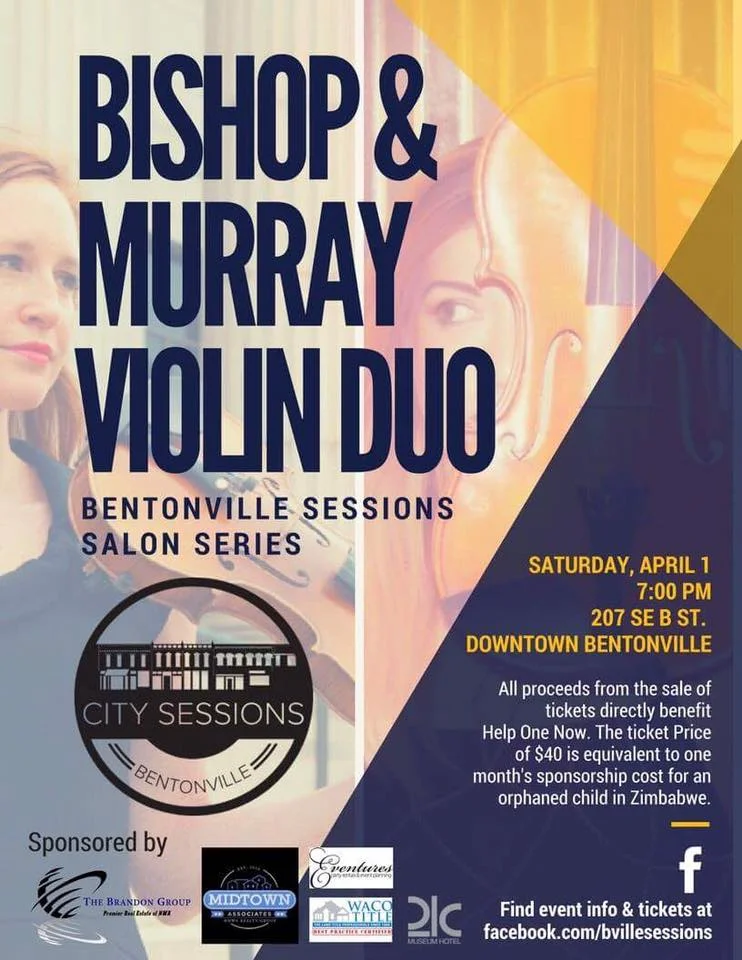
This week Music Monday is dedicated to Peter Schickele and his Duo Caprice for two violins. This is yet another shameless plug for my upcoming performance with friend and colleague, Emily Bishop.
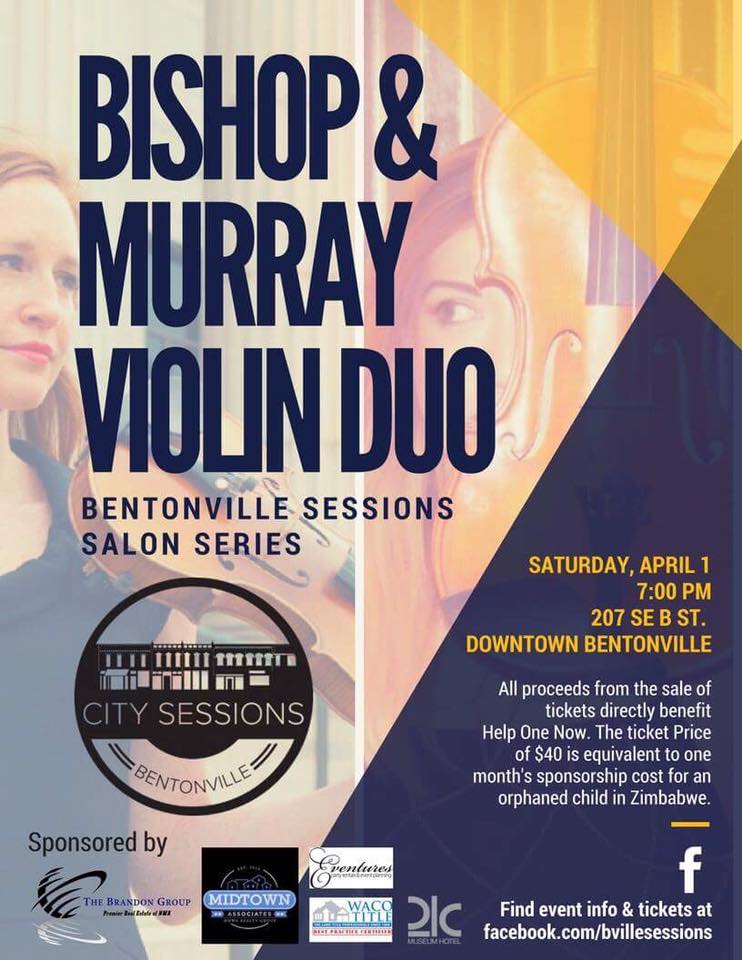
This performance is part of concert series that supports a wonderful cause, and I encourage anyone, and everyone in the Bentonville, and Northwest Arkansas region to attend! Our program is pretty rocking, but the impetus to even start performing as a duo came from hearing Peter Schickele's Duo Caprice.
For reasons that are unclear to me this piece does not get the recognition it deserves, It is tough, but very cool and always receives great reviews from our audiences. Although, not to be confused with the super hilarious duo performed below by Itzhak Perlman and the composer himself.
That duo makes me laugh out loud every time I watch that video!
Peter Schickele, to those unfamiliar with the name, also composes under the psyeudonym P.D.Q Bach and his music is generally amusing and pokes fun at famous classical music.
Anyways, below you will find the 'serious' duo that we will be performing Saturday. This is the only performance I could find on Youtube, so I hope to see you at our upcoming performance!
Enjoy!
Music Mondays - Mendelssohn Violin Concerto in E Minor Op.64
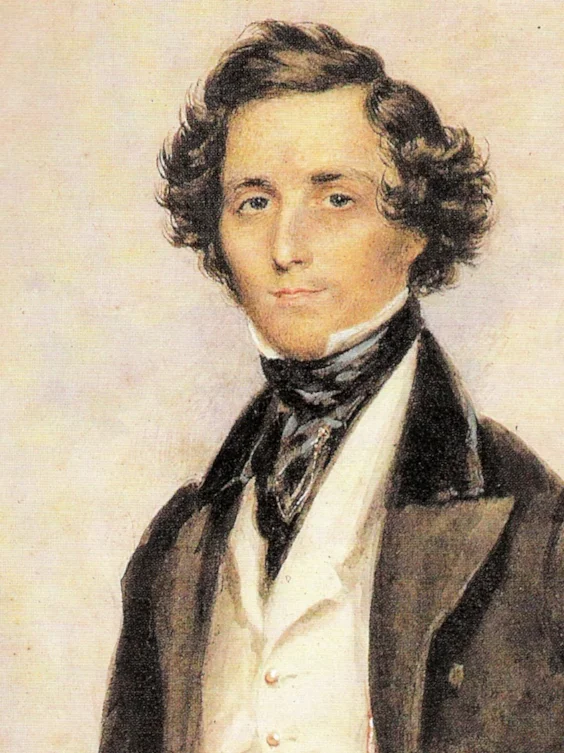
Felix Forever!
My favorite violin concerto was premiered on this day 172 years ago.
Wowee how time flies!
Written with barely enough time to be considered Monday...
This week's gem is one of my all time favorite violin concertos.
Premiered on this day, March 13, 1845 by Ferdinand David, it seemed a perfect fit for this week's Music Monday.
I love the combination of Classical finesse and Romantic expression that simmers throughout the entire piece. Heifetz, Perlman, and Nathan Cole all deem this concerto one of the most challenging in the repertoire citing the flashy (and very exposed) violin solo that happens immediately - no chance to warm up, no orchestral introduction, just wham bam fireworks straightaway!
Check out what the Scholars ;) at Wikipedia have to say about it.......
The concerto is innovative in many respects. In the first movement alone, Mendelssohn departs from the typical form of a Classical concerto in many ways, the most immediate being the entry of the soloist almost from the outset.
Although the first movement is mostly in the conventional sonata form, Mendelssohn has the first theme played by the solo violin and then by the orchestra. Classical concertos typically opened with an orchestral introduction followed by a version of essentially the same material that incorporates the soloist.
The cadenza is also novel in that it is written out as part of the concerto and located before the recapitulation. In a typical Classical concerto, the cadenza is improvised by the performing soloist and occurs at the end of a movement, after the recapitulation and just before the final coda. Mendelssohn's written cadenza was not included in the first published version of the concerto, but instead a "streamlined" version by Ferdinand David without the contrapuntal complexity of the original. This is the most played version today.
The violin concerto stands out from previous concertos with its connected movements. There is no break between the first and second movements, with a bassoon note held between the two. The bridging passage between the last two movements begins almost immediately after the slow movement. The melody is similar to that of the opening, which hints at the cyclic form. The linking was designed to eliminate applause between movements. This would have come as a surprise to Mendelssohn's audience, who, unlike today's, were used to applauding between movements.
The concerto also calls on the soloist to be nothing more than an accompanist to the orchestra for extended periods, such as the ricochet arpeggios at the start of the recapitulation. This too was novel for a violin concerto of its time.
Legacy
Mendelssohn's Violin Concerto influenced the concertos of many other composers, who adopted aspects of it in their own concertos.
For example, the unusual placement of the cadenza before the recapitulation is reflected in the violin concertos of Tchaikovsky (where the cadenza is similarly placed) and Sibelius (where the cadenza serves to extend the development section). Moreover, following this concerto it was very rare for a composer to leave a cadenza unwritten for the soloist to improvise as in the days of Mozart and Beethoven. The linking of the three movements also influenced other concertos, such as Liszt's Second Piano Concerto.
The concerto itself was an instant success, warmly received at its premiere and well received by contemporary critics. By the end of the nineteenth century, the piece was already considered one of the greatest violin concertos in the repertoire. It would become one of Mendelssohn's most popular pieces, and was still regularly performed, even when interest in his music declined in the early twentieth century. In 1906, the year before his death, the celebrated violinist Joseph Joachim told the guests at his 75th birthday party:
The Germans have four violin concertos. The greatest, most uncompromising is Beethoven's. The one by Brahms vies with it in seriousness. The richest, the most seductive, was written by Max Bruch. But the most inward, the heart's jewel, is Mendelssohn's.
Music Mondays - Fratres
Is it Monday already?!
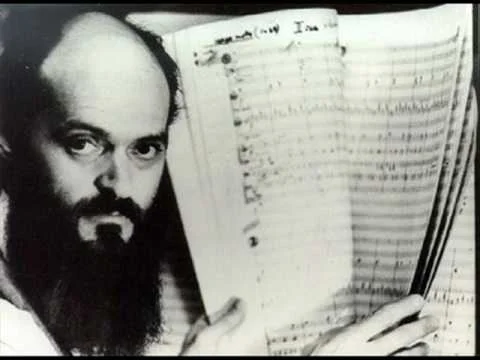
In honor of the SoNA concert this past weekend; my musical offering this week is Fratres by Arvo Pärt for violin and accompaniment.
Silly me, when I first saw the program for our most recent concert, I assumed that our guest soloist, a young violinist named Alexi Kenney, would be performing this awesome piece. I completely forgot that there exists a version (the original, actually) for string orchestra and percussion WITHOUT solo violin.
In fact, I did not know that Fratres is ‘three-part music, written in 1977, without fixed instrumentation’ and there are about 17 different versions listed on the Wikipedia page. Fratres is a “mesmerizing set of variations on a six-bar theme combining frantic activity and sublime stillness that encapsulates Pärt’s observation that ‘the instant and eternity are struggling within us’.”
The following films feature Fratres in their soundtracks:
- 1987 film Rachel River
- 1997 German film Winter Sleepers
- 2005 six-part BBC documentary Auschwitz: The Nazis and the ‘Final Solution’ produced by Laurence Rees, used the composition performed in 1997 by the Hungarian State Opera Orchestra, conducted by Tamás Benedek
- 2006 film La Morte Rouge directed by Victor Erice
- 2007 film There Will Be Blood directed by Paul Thomas Anderson
- 2013 film To the Wonder directed by Terrence Malick
- 2013 film The Place Beyond the Pines directed by Derek Cianfrance
- 2013 teaser trailer for the film A Single Shot, starring Sam Rockwell
- 2013 film Violette directed by Martin Provost
- 2015 film Le Club directed by Pablo Larraín
So here is my favorite version of the piece ~
....and here is the version we performed
P.S. I have started a Spotify playlist of all of the music listed in these posts. Please follow or subscribe to it, as I will be updating it weekly with every Music Monday Post on the Blog. I set that account up pre-Active Violinist so search for the user okmurray and the playlist is titled “Active Violinist – Music Mondays.”
Enjoy!