
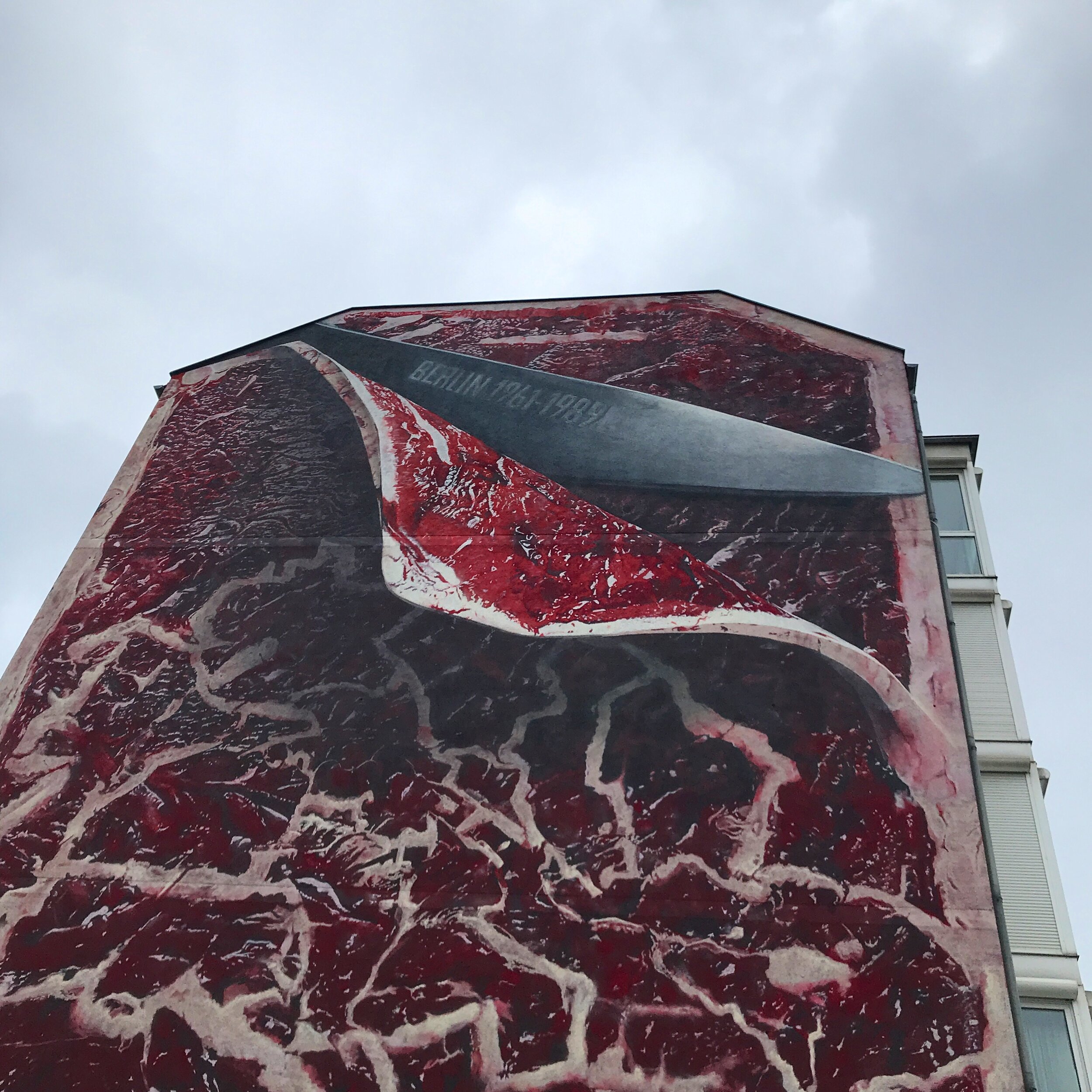
GDR Music Research - A little extra History
The music of East Germany is particularly fascinating because of the rich history full of notable and significant composers and performers. The divide that occurred after World War II did not foster wide-spread acclaim or acceptance of musicians living and working behind the wall even though plenty of music was written and performed. You can learn more about the region and political climate of East Germany in my most recent blog post.

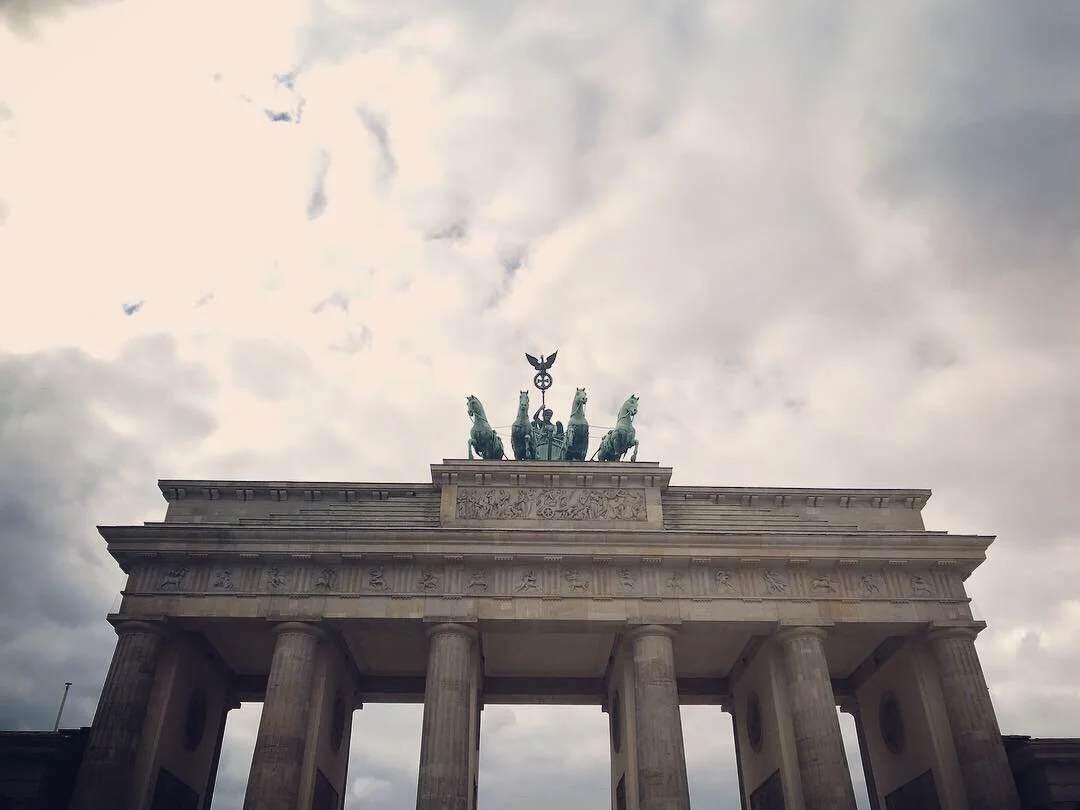
The Brandenburg Gate, Berlin
Hi Friends,
Now that I've shared my goals and resolutions for the new year, I'm diving back into my Violin Music of East Germany project and research. It occurred to me that I need to back up a little bit and dive into some of the general history and facts about East Germany before and after World War II. This land has been the home to some of Classical Music's most beloved composers and performers throughout history, so it is crucial to understand this project's context beyond the forgotten composers of an era.
I've compiled a few YouTube videos that highlight different elements of East Germany, including Rick Steve's overview of some important monuments and history in Leipzig and Dresden, to a walking music tour of Berlin. It also includes a playlist of East German Music, a discussion of the Wall, propaganda footage, and historical documentation of life on the "other" side. All this to paint a picture of the musical climate that has captured my attention.
I've begun exploring music from decades before East Germany became the GDR (or DDR) and will be weaving together programs that intertwine the vast and immense history of a region with the voices of forgotten musical creators.
Enjoy! I hope you find this both interesting and informative.
1. As much as his cheesiness makes me want to roll my eyes sometimes, Rick Steves points out some of the reasons why two of my favorite cities in Germany are so culturally significant, iconic, and beloved throughout time. These cities and their musical significance were the impetus for me to start wondering why there were no famous and iconic composers from this region after World War II
2. Check out this Musical walking Tour of Berlin. This film was recorded at the beginning of coronavirus and geographically organized musically significant city locations. It is incredible how close together some of these important places and musical performances happened to one another. Fascinating and worthwhile. There isn't much about East Germany specifically, but you learn so much about the city and Germany's music and geopolitical environment at large.
3. A brief animated history of Life in East Germany
4. Fascinating footage of East Germany, propaganda, and more
5. The rise and fall of the Wall
I love this quote, "Any barriers we put up to impede freedom, we can also take down."
6. A fascinating cultural documentary about life in East Germany with historical footage
7. Life Behind the Berlin Wall, from The Economist
8. I've been to this place on the Wall. The Berlin Wall Museum is now housed there on the West Berlin side. We also walked through the cemetery and into the Church of Reconciliation (which looks very different now). Can you imagine seeing this every day? This is haunting and eye-opening
9. Last but not least, an hour of East German (GDR/DDR) Music – but NOT violin music…because that's the project I'm working on right now.
The Violin Music of East Germany, Part I
I hinted about this in my Resolutions post for 2020, but here is the first of probably many posts on my latest musical project. I have been deep in the stacks of music from the GDR turning up violin repertoire and chamber music that has fallen through the musical cracks of the universe, at least as far as I can tell. Read all about what I am up to and follow along to hear more about the characters I am acquainting myself with these days.

If you read my New Years Resolution post, you know that one of my goals for the year is to dive into the seemingly forgotten musical world of the former GDR. Already, I have gone way beyond my professional comfort zone with this project. I have reached out to so many sources, some of whom I have never met, some who have been dear friends for years, and one who will be my musical boss, probably for the rest of my life (oh hey Andreas!)

In case you need a geography refresher
I became absolutely fixated on this project last April when I was back in Leipzig for the first time in 10 years to perform with my old band A Whisper in the Noise. I used to tour in Europe frequently, but I never had the time to explore very much because we moved from show to show arriving a few hours before the performance, and leaving early the next day. This time was different. Jeff and I made the decision to explore Leipzig, Potsdam, and of course, Berlin. I knew about East Germany. I knew WHERE it was, I knew about the wall, and I knew the basic outsiders cheat sheet about the region. Through touring and playing music, I know some incredibly talented musical friends from the area. But actually, when I thought about it, I really didn't know anything about that corner of Europe after World War II. What really happened? What was life really like? I started staring at maps and thinking about the wealth of music that poured out of that place. Bach, Felix and Fanny Mendelssohn, Clara and Robert Schumann, Mahler, and Wagner, to name just a few, all spent time there. I realized that when the war ended, and the wall went up, I knew virtually nothing about the cultural and musical landscape of the GDR. Nothing. It was like radio silence to the US, at least as far as I can tell.

The flag
When I came home from our travels, I started casually googling things with the hopes of turning up a bunch of scores, recordings, names, performers, etc. I assumed that I would receive an at-home history class full of youtube videos, current yet unknown to me recordings, and easily accessible scores. What quickly became apparent was that composers and performers existed (and some still exist), but their music has fallen through some weird cracks in the musical universe. I found names, even a Wikipedia page dedicated to the topic. Still, when I looked for scores, I could find very few available for rent, purchase, or free download. This seems weird and wrong, right? Where did these people and their music go? Either I am the worst millennial in the world who can't do an internet search to save her life (which is possible), or somehow they have been forgotten. Welcome to the beginning of my obsession. If I could do another Doctorate, this would make for an incredible project. But alas, I guess I'll just devote all of my free time to it instead.

A guitar case sticker from the EOM20 festival last April in Leipzig.
In the late Autumn of 2019, I attended the Medea Insurrection exhibit at the Wende Museum in Los Angeles, I asked the Chief Curator what he thought about my idea. He gave me his card and told me to contact him immediately. We sat down for a meeting the following week, and he gave me several resources to contact, avenues to pursue, and ideas to follow up on. Since then, I have been chipping away at this project. I have contacted libraries in Germany, reached out to curators in Los Angeles, emailed cultural and research institutions on both sides of the Atlantic. I have slowly compiled a list of people AND found scores, although not necessarily the same. I am just a few steps into a deep rabbit hole of not new music.
My musical project is to uncover, perform, and record as much violin repertoire and string chamber music written by composers from the GDR as I can. So far, my research has brought up musicians from all over the musical and political spectrum. Over the next few months (or weeks, or maybe even days depending on the coronavirus situation), I will be sharing some of my findings here, so stay tuned.
Regarding this project, I am always looking for help with the following:
composers that fit the above criteria,
libraries with resources that you can help me access,
friends who own weird old music collections that could maybe help, and you could put me in touch with
google wizards and wizardry
financial assistance (know of any grants, residencies, scholarships, etc.?)
Musicologists who are experts on the topic
Musicians interested in collaborating/helping
German friends (or friends of friends) who could help with a little translating, on the ground leg work, resource finding, etc.
anything else that comes to mind
I would greatly appreciate any and all help. This is truly a musical "community building" endeavor. Just the sort of thing that I absolutely adore but is so much more rewarding when everyone gets involved.
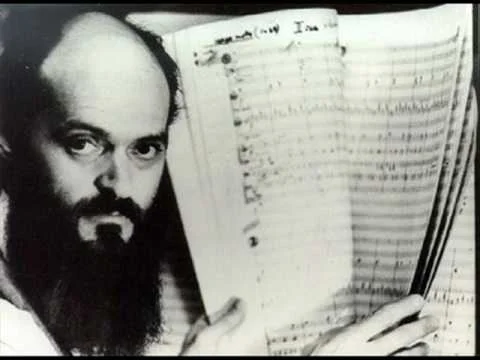
Music Mondays - Fratres
Is it Monday already?!
In honor of the SoNA concert this past weekend; my musical offering this week is Fratres by Arvo Pärt for violin and accompaniment.
Silly me, when I first saw the program for our most recent concert, I assumed that our guest soloist, a young violinist named Alexi Kenney, would be performing this awesome piece. I completely forgot that there exists a version (the original, actually) for string orchestra and percussion WITHOUT solo violin.
In fact, I did not know that Fratres is ‘three-part music, written in 1977, without fixed instrumentation’ and there are about 17 different versions listed on the Wikipedia page. Fratres is a “mesmerizing set of variations on a six-bar theme combining frantic activity and sublime stillness that encapsulates Pärt’s observation that ‘the instant and eternity are struggling within us’.”
The following films feature Fratres in their soundtracks:
- 1987 film Rachel River
- 1997 German film Winter Sleepers
- 2005 six-part BBC documentary Auschwitz: The Nazis and the ‘Final Solution’ produced by Laurence Rees, used the composition performed in 1997 by the Hungarian State Opera Orchestra, conducted by Tamás Benedek
- 2006 film La Morte Rouge directed by Victor Erice
- 2007 film There Will Be Blood directed by Paul Thomas Anderson
- 2013 film To the Wonder directed by Terrence Malick
- 2013 film The Place Beyond the Pines directed by Derek Cianfrance
- 2013 teaser trailer for the film A Single Shot, starring Sam Rockwell
- 2013 film Violette directed by Martin Provost
- 2015 film Le Club directed by Pablo Larraín
So here is my favorite version of the piece ~
....and here is the version we performed
P.S. I have started a Spotify playlist of all of the music listed in these posts. Please follow or subscribe to it, as I will be updating it weekly with every Music Monday Post on the Blog. I set that account up pre-Active Violinist so search for the user okmurray and the playlist is titled “Active Violinist – Music Mondays.”
Enjoy!