
Routines and Rituals for Optimal Living that Actually Work!
Over the past few months I’d tweaked my daily habits a little bit and figured out some simple yet effective practices that I’ve managed to stick to! I thought you couldn’t teach old dogs new tricks si I’m extra impressed with myself for changing and “enhancing” parts of my day that are often on autopilot. Read, tell me if any of these work for you, AND tell me your routines and rituals that help you find success in your days.
I love routines and structure in my day. I keep a monthly, weekly, and daily schedule of things I hope to and plan to accomplish. I EVENTUALLY complete about 95% of what I plan to do each week and month...just maybe on a slightly different timeline.
I also love the concept and notion of hacking my days with optimal routines. I see things all the time with titles like “5 simple morning moves to get you going” or “the ideal bedtime routine for your best night of sleep” or "buy these products for the softest skin of your life," and I think I WANT THAT! I Want the Best Morning! I want the best sleep! I want the best skin! And then I do these things for a few days or a week, or whatever. Then I'm back to my old habits prioritizing coffee in the morning, forgetting my nighttime face mask, and watching Netflix until too late at night.
When COVID-19 hit, I started experimenting with a few routine changes, additions, and enhancements that resemble slight tweaks to my daily routines rather than a massive overhaul. Below are the upgrades I’ve managed to maintain in my daily routine over the last few months, mostly because they are simple, easy, and effective.
So here are my new habits. Nothing fancy. No new products to buy. I’ve broken them into 2 categories – General Well-being, and Musical Well-Being. They are simple and effective. I’m sharing them with you because who doesn’t need more things to add to their daily routines? LOL
Rituals for a Smooth Daily Existence

Drink 1 glass of water before bed
Drink 1 glass of water first thing in the morning
Read for 15-30 mins (preferably a real book, not a screen) before sleep.
Overnight, plug your phone in on the other side of the room (or a separate room altogether).
Rub each foot, ankle, lower leg every night for 1-2 minutes before going to bed - ideally slowly and unhurried.
Write down the daily TO DO list the night before and plan WHEN you will do each item. This makes me less inclined to put things off until the evening.
20-30 mins of light-moderately strenuous in the morning (preferably yoga or a walk around the neighborhood followed by 5-10 minutes of meditation/quiet time.
Go on at least one long walk (60+ minutes) per week.
Avoid coffee after lunch.
A cup or two of herbal tea in the Evening
Routines for Optimized practice time

Get at least some, if not all, of my practicing done before lunch.
Foot rub
Timani Warm-Ups (more on this soon, but check out my original Timani blog here)
25-45 minutes of Violin Technique warm-ups AFTER Timani routine.*
Put the phone on airplane mode during practice time.
Use Pomodoro Method to organize practice times and breaks (I wrote about this for corpSonore, you can read it here)
Plan my practice per week – select technical exercises, repertoire, long term, and short term goals at the beginning of the week and write them down.
*If you’re thinking, “what the hell is this Timani stuff she’s talking about?” don’t worry! I just completed the level 1 teacher training course, and I would be happy to tell you all about it. You can now read the blog post I wrote about it last year when I first discovered it and fell in love with the Technique. I’ll be sharing more soon.
My Ideal Day
This is the day my Wellness Dreams are made of. These days don't happen often, but I feel like I’m living my best life when they do.
Wake up early
20-30 mins of yoga in the morning
Violin Practice for 2-3 hours
3 delicious meals
Moderate to Long Hike in the Afternoon or Evening (or Morning).
Time to journal and reflect.
Read a Good Book
Hot Tea in the Evening
A Warm Bath before bedtime.

What rituals and routines work for you?
The Silver Lining of Coronavirus
I’ve been reading about people reflecting on the good and bad in their lives right now. Globally, it is a mess but I think beautiful new beginnings can blossom out of difficult times. I know that sounds flippant, but I started thinking about what is good in my life right now, and underneath all of the stress and uncertainty, and all of the things I do to fill my time, I found a constant flow of passion and enthusiasm for music, and also a shift in my priorities and trajectory. I’m not trying to belittle anyone else’s experience or "brag'“ (please don’t read this as bragging) in any way, but taking some time to reflect on the change did me good, so I thought I would share in the hopes that you share your story too.

I’ve seen many people online reflecting on the “silver lining” of the current situation. It is interesting to hear others talk about what they are learning about themselves, and the new ways people are finding to pass the time. I have many friends who have lost their jobs. All of my concerts for the foreseeable future have been cancelled, but as scary and grim as it is out there right now, I think it is acceptable to see the good as well. Sometimes out of the bad, grows the new and sometimes the new is fresher and better than whatever we were forced to leave behind.
Now that we’ve been sheltering at home for…..how long has it been? I’ve lost track. I’ve gained some interesting perspective about myself.
Here are a few things I’ve learned:
I’m a busy body by nature but I didn’t realize how exhausted I was just existing in the world. I typically work 6 or 7 days per week and I wasn’t aware what a toll it was taking on my whole system and I’m not just talking about feeling tired or stressed.
My creativity feels like it has come back to life.
There is balance in my life, I restrict my work to only 5 days per week.
I love making music, and going on long walks.
Not rushing through everything feels like such a simple luxury.
Devoting time to projects that matter to me now feels essential to my daily routine.
Having the time to literally stop and smell the roses is a blessing.
This time at home has shifted my priorities and clarified things that I was too busy or stressed to think about, and has given me goals that I want to pursue with clarity when life as “normal” resumes.
Is this the case for anyone else?
Suddenly, without the obligations I feel like I have returned to a state of my truest needs and desires. Does that resonate with anyone else? I keep finding myself thinking “Do I really want to play ~insert random gig~ when life resumes? Do I really want to go through the rat race of hoping to get hired for whatever little thing? Do I want to be anonymous violin player #2,347,000 in Los Angeles or do I want to invest my efforts in forging a new path that is completely my own? Can you guess what my heart keeps whispering? I know this will be a game of courage moving forward. It is always so easy to return to what is comfortable and easy.
To clarify: No, I have no intentions of giving up the violin. I simply feel like my goals and path have come sharply into focus. So what have I been filling my time with these days?
Here are a couple of the things I’ve been up to since the lockdown:
I created a Wellness Chart to motivate me to move and make music every week. Turns out it is fun and helpful so I made it available to the world at large. You can grab one for yourself here.
*Disclaimer: I count many daily endeavors as movement, like sweeping, mopping, vacuuming, walking the dog, etc. and I also count anything that keeps me creatively engaged as a musician. So yeah, sometimes playing Disney songs really does the trick and sometimes figuring out audio equipment and recording ridiculous mic checks also satisfies this category.
I realize that I engage with students in a special and unique way so I added a teaching section to my website and am building a catalogue of videos to help students. Check them out and let me know if they’re helpful for you, your kids, you students, or yourself.
I started a Youtube channel and am less scared to share my playing with the world. This used to scare me tremendously but hell, I’m listening to Brené now and trying to act fearlessly.
*Disclaimer: Right now there are tons of teaching videos on there (see above bullet point) but there will be more performance videos soon.
Speaking of…the Brené Brown journey was and continues to be quite the wake up call for me and I am not alone. I heard from so many people who could relate and commiserate. Shockingly they weren’t all violinists, or musicians, or even performers. So many of us carry this bulky useless shame baggage around with us and it is so limiting! Not to sound like a broken record or anything but, I am ready to do the work and I think I am at the very beginning of this journey. The current empty space in my life has given me time to investigate, grow, heal, and repeat and it is what I am most thankful for right now.
Also, I love playing the violin. Practicing things I want to play is so liberating and it feels awesome to dig into the old classics. By classics I mean Vivalidi, Bach, Corelli, etc. I think it might have had something to do with reading books about Stradivarius recently. Also, I used to have so much Bach anxiety. I used to just tear myself apart about my performance, interpretation, intonation, bowing, etc. etc. etc. but it has been so nice to play it because I love it. Especially the Chaccone which I had always avoided because I didn’t want to “ruin” it. Now I am finally realizing that there is no ruining something that brings so much joy to my life (this is related to my Brené learning curve I think).
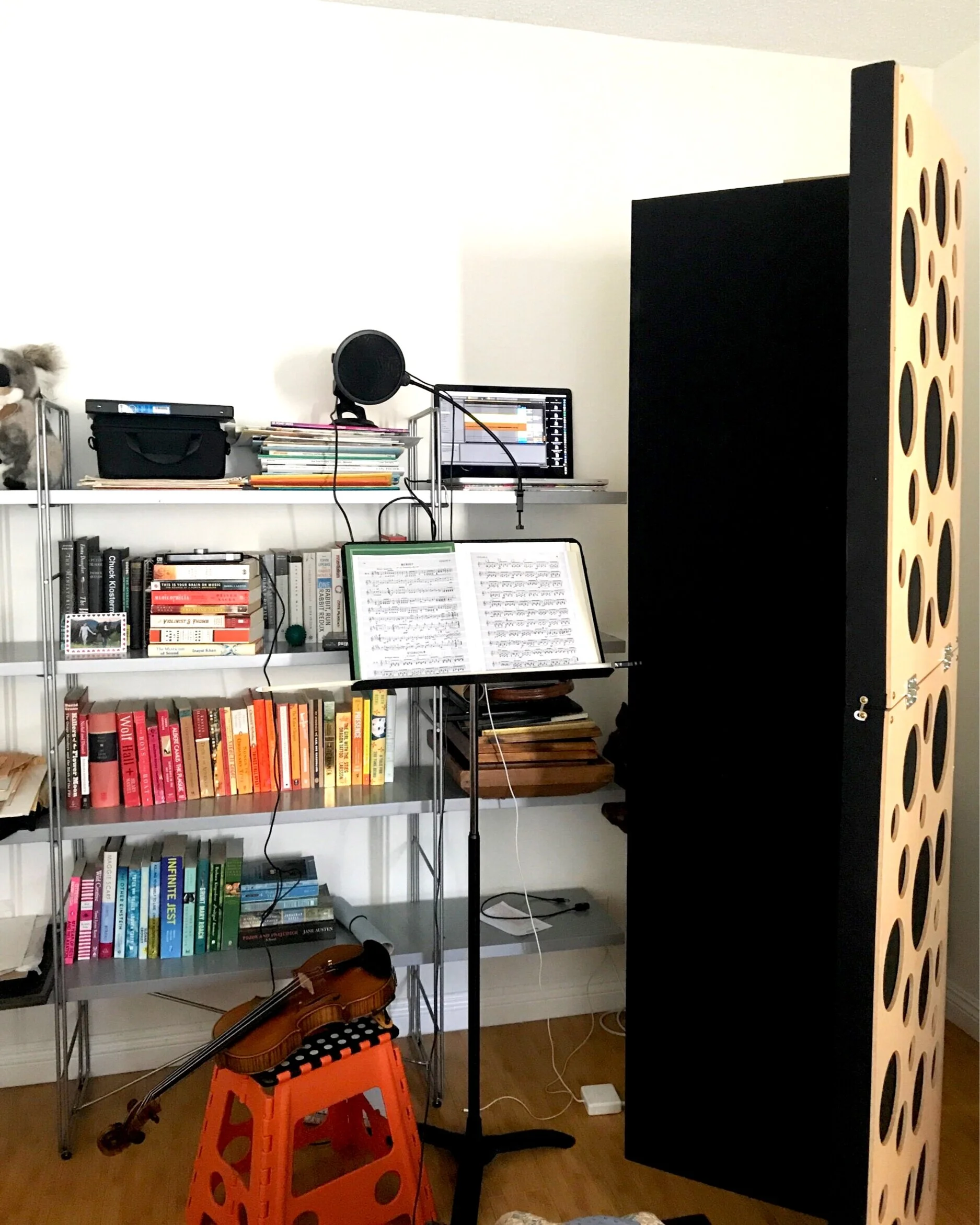
I’ve set up my home recording “studio” thanks to the help of some dear friends (let’s call it how it is Matt Irwin and Alex Rose - you guys are the best teachers a violinist could ask for) who know much more about microphones etc. than I do. This is something I avoid for too long but thanks to Martin Chalifour, asking me to record with him recently, I was forced to figure this out sooner rather than later. Some of my anxiety has subsided and I can do a not stellar job, but at least I can do it. Now I just keep staring at the equipment and thinking of things I want and need to record.
I’ve spent some much needed time on corpSonore organizing materials, expanding our community, and planning for the future and how we will grow. Now that I have the time to work on it, I want to commit ALL my time to it. I was never a person who considered herself good at sales, or interested in pitching things to you, or talking your ear off about products and features, but I swear if you get stuck in the elevator with me I will pitch you so hard on this. My passion for this has reprioritized what I want to do when lock down is over. Read this as your call to action, to join this community and the growth that I am determined to make happen.

I have dived further into the GDR composer research and since writing my last post about it have written emails to people I never thought I’d be qualified enough to be taken seriously AND THEY WROTE BACK…AND THEY HELPED ME!!!! I can’t believe it. In my next post I will share some of the names of female composers from the GDR I have discovered and desperately need help finding the musical scores from their life. I can find absolutely nothing more about them and this feels strange. This project has turned into such a treasure hunt.
Finally, I’m working on a collaboration with my beautifully talented friend Meghan Irwin, the illustrator who keeps everything Active Violinist more beautiful than I could ever hope or imagine. This is a project I’ve been thinking and dreaming of for five years and finally I have the mental space to move it along.
Conclusion:
It turns out I like spending time at home. It has forced me to figure out some things I’ve been avoiding, and has allowed me the time and space to explore things I really love. It has also given me the time to think and pursue my creative ideas, and the verve and passion to forge a path for corpSonore.
I I am grateful for the continued work with the LA Phil and my students. I love exploring Los Angeles, and I think I needed this forced time out to get a hold of my priorities.
But honestly, I want to know - do you feel the same about your time sheltering at home or has your experience been different? What is your unexpected silver lining?
The "Brené Brown Made Me Feel Things" Post
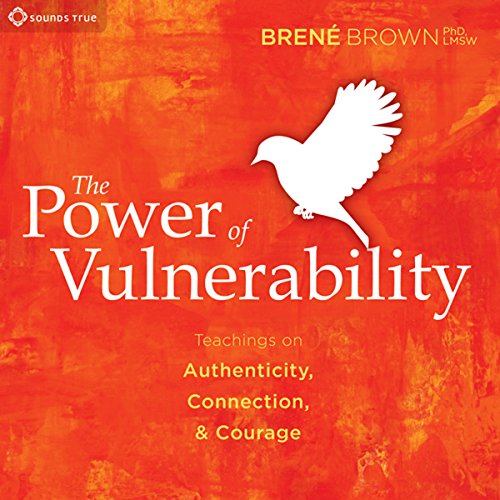
I made the Brené Brown plunge last week with The Power of Vulnerability and have been watching and listening to everything I can get my hands on since. I realized that I harbor so much shame around my professional life and in order to find the success I truly want, I need to get to the bottom of it, and unpack it. This is step one in that direction. It is personal and vulnerable in a way that I don’t often share.
Warning! This is a vulnerable post. I don’t usually share my feelings with the Internet abyss, but this is an outpouring of feeling that I can finally articulate. I'm using this as a place to make sense of it.

I’m talking about shame. Professional Shame.
I know I’m late to the Brené Brown party, but I’m finally here. I recently listened to all 6-ish hours of The Power of Vulnerability over 2 days, and it rocked and is still rocking my world. I’m not sure why it took me this long. Maybe I was just resisting the inevitable. Perhaps deep down, I knew that these would be lessons that I needed to be ready for.
If you’ve ever seen or heard Brené Brown speak, you know that she is exceptionally engaging, funny, charismatic, and articulate. You laugh just as much as you learn, and you have so many “Oh! Me too!” moments when she shares personal anecdotes and stories from the research. It is incredible to hear her share such vulnerable stories so candidly in a way that unites the audience. You’re not laughing at her, you’re chuckling knowingly with her.
Over 6 hours, Brown frequently returns to the role of shame in our lives and the difference between shame and embarrassment. She emphasizes shames central role in the problems we have individually and collectively. I was shocked by my physical reaction to some of the explanations and stories of shame. I realized that these feelings have surrounded my music-making for years. But instead of shame, I've understood it as "not good enough."
I could write about this for years. But when did this start? I can’t think of the last interaction I’ve had with a colleague where someone said or did something that suggested my playing was worthy of shame. Yet, the voice inside me is constantly reminding me that I am not worthy.
How did it get like this?
The Power of Vulnerability made me realize that I feel shame when I don't win, or when I'm surrounded by musicians with fancier resumes, or even admitting to these feelings. I can feel myself flush with the shame of not achieving just writing that last sentence. I have never before considered any of these feelings as shame. I would simply turn the mirror around and chastise myself for not being better. Then, I would practice more, work harder, sign up for more “tests” and feel the same feelings. Shame was manifesting itself in a tight loop of never feeling good enough and always like I had to prove myself. I'm still tempted to slip into this cycle. It is like a terrible security blanket.
But why?
I am just starting to unpack these emotions and patterns, but I've realized that for many years I was taught to feel shame about my playing. I studied with the same violin teacher in high school as in graduate school. It wasn't until after I left his studio the second time that I realized he “motivated” me with shame. This is complicated because the relationship between a teacher and student is extremely personal, and the dynamic in a private lesson is never the same between two lessons or two students. As much as I'd like to think that I treat my students entirely equally, there will never be a uniform interaction between myself and each student that I teach. It is impossible. However, there is knowing a student and fostering a healthy working relationship. Then there is knowing a student and manipulating them.
I’m not sure if our interactions were as clouded when I was in high school and it escalated when I returned to his studio, or if it had always been like that. When I look back, I see the patterns that emerged out of working together over many years. Always, there was the idea that I had to be better, so I didn't embarrass myself or him. He mocked me in studio class in front of my peers. He would purposely embarrass and shame me in front of the string faculty. He told me it was my fault if I didn’t win an audition. He asked a guest artist to address the fact that I "freaked out" and couldn't control myself in performances (he actually said this at a masterclass while I was on stage).
I remember my cheeks flushing, and my knees locking as I braced against that public attack. In fact, while I often braced against it and – in public – appeared stable and unaffected, I was crumbling. When I played for him, his response was often, "Really? That's how you're going to play that?" or "Why are you playing like that? Nobody plays like that." He commented on my body, and he publicly criticized the clothes I wore. I was critiqued harshly if I followed my own musical (and eventually research) interests, so I started "whitewashing" my playing. I worked so hard to play only what was on the page. I removed my musicality and allowed him to tell me exactly how I should play the music. I realize now that I was bracing against him and putting up a wall for emotional safety.
I should have seen this as an indication of an unsafe learning environment. When we finally parted ways, it was not pretty, and I ultimately reported him to the dean of the music school. In our last interaction, he told me that I was too sensitive, and I always had been. I was so cut by that. I understood it to mean that I was weak. That I couldn’t’ handle it and all of my failures and shortcomings were my fault. I was ashamed. These feelings were coded into my violin playing. I left his studio and limped through the end of my Doctoral degree. I would never dare to diagnose him, but I realize now that he taught from a position of fear. His own shame tainted and tarnished his teaching, causing damage to his students. I’ve never typed this out before, and I’ve never spoken so boldly about this to the music community at large, but I know that I am not the only student he treated like this and I wonder if they harbor the same feelings that I do.
For years after leaving his studio, I did so much to prove to myself that I could do things. I could win auditions. I could perform. I could keep going. I was fine. I was over it. I was “healed.” I certainly was not too sensitive. But this nagging voice inside me was always reminding me of my shame. It would whisper, “You’ll never be able to play this. You’ll never be good enough to perform it, not like a real violinist,” and I would return to the shame and perfectionist cycle of continually working to prove myself. I was the most diligent technical exercise practicer, metronome user, and rule follower. But I was also a particular type of hard-work avoidant. I was the most diligent "don't express yourself" player, and in reality, that is freaking impossible…and really, what is the point?
This is about:
I’m not saying this book has made me a better violinist. I’m merely confessing to breathing a weird sigh of relief that I finally understand the feelings that surrounded my violin playing. My career. My profession. I'm guessing this must be similar to what it feels like to finally get a diagnosis after years of struggling. Like “oh my god, its not me. I’ve been trying so hard to fix a problem that is bigger than myself.”
This is not a story of assault. There was no predatory sexual behavior. This is not a story for the #MeToo movement. This is the realization that shame played a role in shaping me as a musician. I can finally see that. In my musical training, there are long patterns of associating failure with shame, and that is incorrect. Failure is something to learn from, not something to rip apart the joy of why you wanted to make music in the first place. I know that this teacher is not solely responsible for these feelings. But I also know that a mentor who motivates with shame is not helping his students grow.
About one year ago, I got my musical mojo back. Some things became crystal clear. Projects I had to work on, avenues of interest that I needed to explore, places I needed to go, people I needed to collaborate with suddenly leapt into focus. My purpose as a teacher became obvious; The most important thing I can do for my students is to create a safe place in their lives to develop, engage, and explore. Something that I now realize, shockingly, I had ripped to shreds every week of my life for years.
I have big goals that I finally feel ready for and in order to move forward, I have to shed this straightjacket. I realize this now. This is just phase one of phase one of phase one of the work I need to do.

It has been about a week since I finished the book, and I am now listening to Dare to Lead. I’m trying to pull all the pieces apart and examine them in an attempt to heal the cracks. I’m finally ready to make peace with this and use it to guide me, like a "what not to do" list. I will probably be unpacking this for years, and sometimes on this blog, but it is necessary. Musical shame is something I don’t wish on anybody. It is like a cancer of your joy. It eats away at what is beautiful about making music and leaves you feeling less than. And there is simply no place in this world for that type of disease.
I hope this resonates with you. I would love to know your story. Please share.